Collecting Tip: Keep Your Eyes Peeled

Without a doubt, the fun of collecting is the hunt.  But don’t ever think that the hunt has to be relegated to thrift stores, antique shops, and auctions.  Sometimes, the hunt even comes to you.

Case in point: I was in high school when my local library retired its card catalog.  In conjunction with closing their catalog, the library offered patrons a giveaway: a free card signed by the author of the book.  The only catch was that you couldn’t request any specific author or book—it was the luck of the draw.

Not one to give up an opportunity for a collectible signature, I signed up.  And this is what I received:

I really did luck out with what I won—I’m a sports fan, and have always followed racing, so to get a card signed by Richard Petty was something of a thrill.

Now, what I have is a cross-collectible: I have a piece of sports memorabilia, a signed autograph from a celebrity, and a piece of library history (the card catalog has now gone the way of the dinosaur). 

Which just goes to show you: always keep your mind open, always be on the lookout.  You never know where you’re going to find those really cheap—or, in this case, absolutely free—pieces to add to your collection.

What about you?  Have you stumbled upon free goodies like this one?

The Little Half-Sister for United States coins

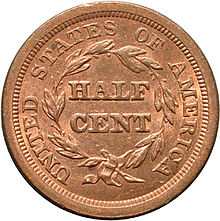
The nickname “Little Half-Sister” in the world of coin collecting is directly tied to the half cent coin produced by the United States mint. 

Photo courtesy of Wikipedia.com

This coin first came about with the Coinage Act Of 1792 (this law established the United States mint and regulated the coinage of the United States).  The coin was produced from 1793 to 1857 and was made of 100 % copper (there were a few years along the way that a half cent was not produced).

There are no mint marks on any of the half cents that were ever produced, and this is because of the fact that they were made at the Philadelphia mint.

Although half cents were issued for more than 60 years, they remained one America’s unwanted coins. They proved to be of little use, and they were often kept in storage at the Mint.  Production of this coin (often stopped for a couple of years) was often interrupted by shortages of copper and lack of demand.  After a few years, the mint turned to English based companies to produce the planchet for the coin (the war of 1812 stopped this, and the US went back to producing the planchets for the coins).

This denomination would make a great conversation piece and would be a great way to help introduce people to coin collecting.

Have you run across one of these “little half-sisters” yet?

Need a Trime? That will be 3 cents!

The United States has produced some interesting coins, and the Three Cent piece is definitely one of them. 

The term “trimes” is widely used today as a nickname for these coins.  That nickname was first used by the mint director James Ross Snowden at the time of their production.

The United States started to produce this coin in 1851 as a result of the decrease in postage rates (which went from five cents to three).  The mint also started to offer this coin to answer the need for a small-denomination, easy-to-handle coin.  This coin was released in silver (the silver content was raised in 1854) to help encourage circulation.

Photo By Bobby131313 for wikimedia.com

Silver coins were hoarded in the early 1800’s–and when the Civil War erupted, silver coins were hoarded even more.  This led to the Three Cent piece getting hoarded as well.  Because of this, the United States mint would eventually print fractional currency (paper money with a face value of 3 cents, 5 cents, 10 cents, 15 cents, 25 cents, and 50 cents).

The composition was changed in 1865 to nickel.  The design of the coin was also changed when the composition was changed, so it’s easy to tell the nickel variety from the silver one.

Production of the trime began to taper off in the 1870’s, but mintage of the coin did not come to an end until a couple of years later in 1889.

Photo By Bobby131313 for wikimedia.com

Like with any coin, there are unlimited ways to collect this denomination.  Will it be just silver examples?  Nickel copies?  Certain years or die varieties?  It is completely up to you.

Have you run across one of these cool coins?

What are some of the colors that Fenton made that you can run across?

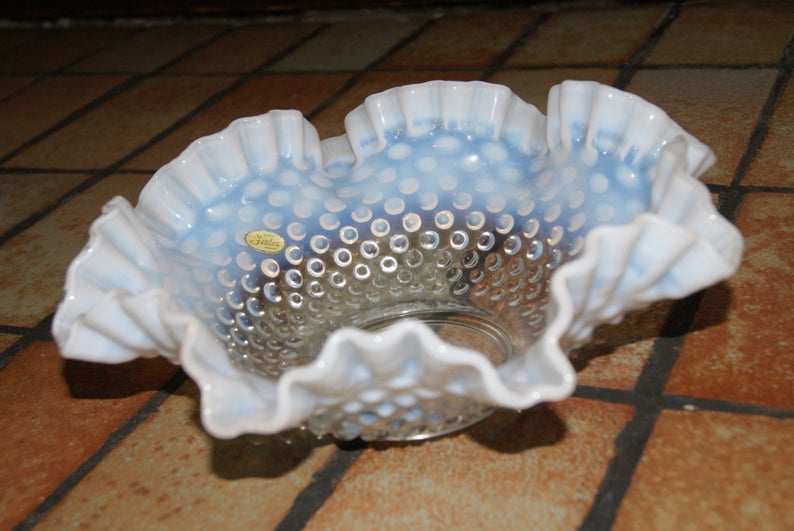
When Fenton was in business, there were literally a ton of colors that were made.  Apple green, French Opalescent, silver crest, cranberry and even green opalescent are a small sample of colors that were made.  Here are some more that you will run across:

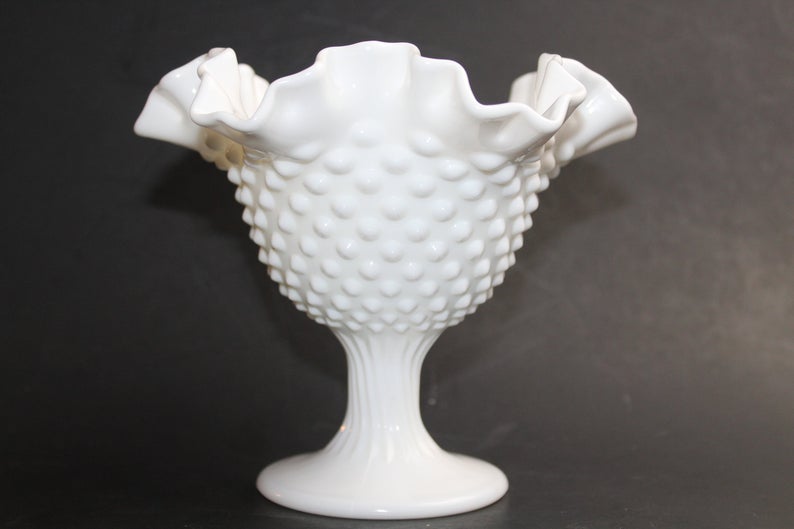
Black Crest—this color also acts as the pattern of the piece.  Any piece with this coloring will have a milk glass base and black trim at either the rim or on the foot.

Photo courtesy of Replacements.com

Milk glass—this type of glass is completely white in color, and you can’t see through it.  Fenton introduced this in the early 1950s with the hobnail pattern, and it became their flagship pattern.

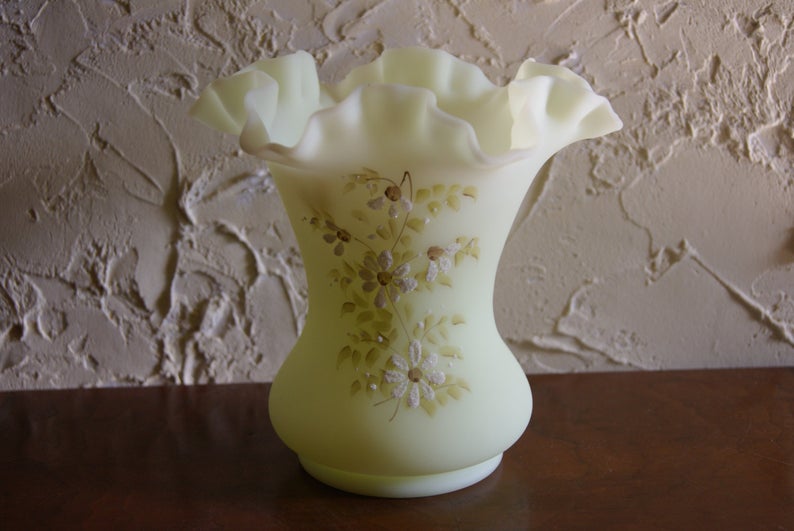
Custard Satin—this is light yellow in color and was given an acid wash to give it the satin finish.  The color was introduced in 1972 and this color can also be seen with a hand painted motif on it from time to time.

French Opalescent—this color has a crystal base with a white overlay on it, and the color was made from 1952 to 1968.

This is a very tiny portion of what you will see when you are out shopping.  What Fenton colors have you run across?

What are some of the parts and pieces of vintage furniture?

Slipper feet, veneer and leafs are a small selection of some of the parts of a piece of vintage furniture that you will run across when you are looking at furniture.  You never know what you might find when you are out at an auction, estate sale or even an antique mall.  Here are a couple of pieces that you may run across:

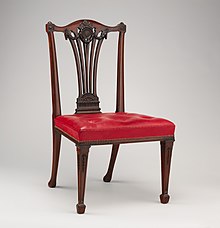
Top rail—this is the horizontal rail at the very top of a chair back.  There are as many designs of a top rail as there are designer.

This photo is courtesy of Wikipedia.com

Manchette—this is an upholstered arm that is found on a wooden-frame chair.  This portion of the arm will be upholstered with the same material that the seat has.

This photo is courtesy of Wikipedia.com

Stretcher—this is a horizontal support piece that is found on a table, chair or other item of furniture.  This piece ties vertical elements of the piece together.  A stretcher can be seen in the bottom of the photo:

This photo is courtesy of Wikipedia.com

This is only a small portion of what you will run across.  What have you seen?

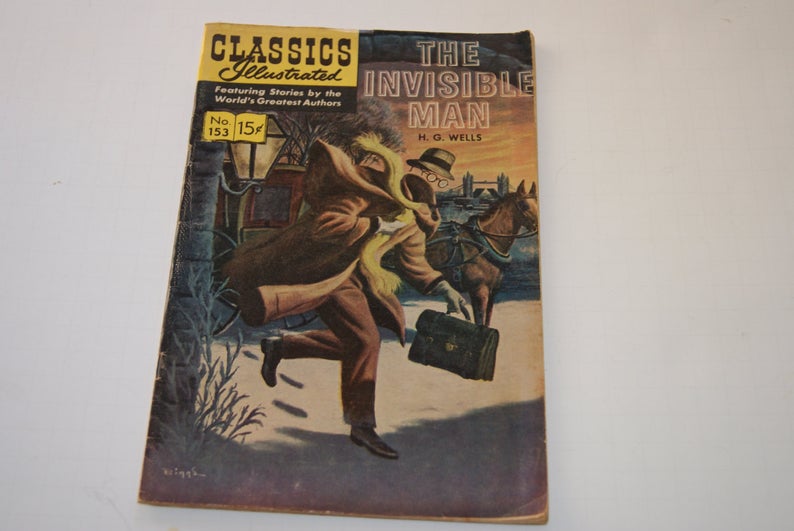
The collectible comic book series titled CLASSICS ILLUSTRATED

CLASSICS ILLUSTRATED is an American comic book that was first published in 1941 and finished its first run in 1971.  The comic book series featured adaptations of literary classics like Les Misérables, Moby Dick, Hamlet and even The Iliad.

Created by Albert Kanter, the series ran for 169 issues.  When the series debuted, it was first called CLASSIC COMICS and was renamed to CLASSICS ILLUSTRATED in 1947.

This series also had a lot of great artists as well.  Lillian Chestney, Matt Baker, Jack Abel, Matt Baker and even Dik Browne are a small handful of the artists that worked on this series.  The one that jumps out at me is Jack Kirby.

Jack Kirby may not be a name that you might have heard of, but some of the characters that he helped create will.  A few of the notable characters that he helped create are Captain America, The Fantastic Four, Thor, The Avengers, Iron Man, The Hulk and even Black Panther.

There are several ways that you can collect this series—you can collect the comics themselves, the artists or even the titles that the comics covered.

You can see all of the great CLASSICS ILLUSTRATED comics that are in my shop on Etsy here.  Head on over and check them out!

This is definitely a One-Of-A-Kind item!

I am always on the lookout for things that are unique.  I ran into this extremely cool tray a couple of years ago, and I immediately fell in love with it.

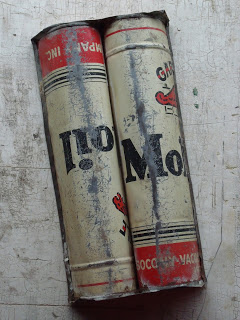
At least 30 years ago, a person in their garage needed a nut and bolt tray.  They reached for the nearest item, which happened to be a Gargoyle Mobiloil 5-quart oil can that was made by the Socony Vacuum Oil Company.

Whoever made this tray really did a good job.  They took their time and rolled the edges so that you won’t get a cut, and the compartments appear to be pretty close to being even as well.  It is insanely well-made and the tray borders on tramp art—you could even call it Garage Art.

When this tray was made, it is obvious that money was extremely tight.  Everything had to either be used until it was worn out or be remade into something else that was just as useful.  That’s how this tray came about.

The skies are the limit when it comes to finding a use for something like this.  It could be used on a desk to hold office supplies; it could hold pocket change and even your car keys.

What kinds of remade items like this have you run across while out shopping?

A brief history of the Westmoreland Glass Company

The Westmoreland Glass Company was founded in 1889, and was based in Graceville, Pennsylvania (which is not too far from Greensburg, Pennsylvania).  The company was run by brothers George and Charles West, which were the majority shareholders of the company.

When the company opened, the main production was pressed glass tableware lines, mustard jars, and even candy containers.

The brothers ran the company until 1921, when George West went on to run his own company.

The company was then run by Charles West and his close friend Ira Brainard.  When this happened, the name of the company changed from Westmoreland Specialty Company to Westmoreland Glass Company.  Shortly after the change, Westmoreland started to produce cut glass and even high-quality hand decorated glass.

The 1940’s saw James H. Brainard (Ira’s relative) take over ownership of the company.  At this time, they went with mass produced milk glass and discontinued the hand decorated glass.

The company eventually went out of business in 1984, and the building was apparently converted into a storage facility.

There’s a very wide range of glassware that Westmoreland produced over the many years they were in business.  This can be very helpful for a collector that’s on a very strict budget, and they can find something to decorate with or collect for not much money.

What kinds of Westmoreland pieces that you have found that you treasure?

The green flag is about to drop on the Indianapolis 500. . . from 1972?!?

The Indianapolis 500 race (also known as the Indy 500) is a race that’s held every year at the Indianapolis Motor Speedway, and it’s been held there since 1911.

The photo-finishes, drinking the milk in victory lane and even the fabled yard of bricks at the start-finish line are just some of the things that you think of when it comes to this race.

One of the years that is memorable for this race is 1972.  Several important things happened during 1972, and this is the first year that Jim Nabors was invited to sing the pre-race song “Back Home Again In Indiana.”  It was the start of a 36-year tradition for Jim Nabors performed nearly every year from 1972 to 2014.

The second thing that happened in 1972 is that this is the first year that the cars were allowed to use bolt on wings.  This helped the speeds climb drastically—Bobby Unser won the pole with a remarkable 195 mph, and the average race speed was 162 mph (that speed would stand until 1984).

The 1972 race was also the first year where the Electro-PACER light system was used during the caution laps at Indy.  The officials at the speedway also did not use the pace car during the cautions, and this enforcement tool was used at Indy for 7 years (there were some controversies with the system in the years to come).

There are also many collectibles for the race, and one of them is this souvenir tumbler by Libbey Glass.

The Libbey Glass Company made this terrific souvenir glass celebrating the 1972 race. The glass features a blue race car scene on the front with a yellow 1972 at the top, and the back even has all of the race winners from 1911 to 1971 in blue.

You can see this great tumbler in my Etsy shop here, head on over and check it out!

What a great gift for a fan of the race!

What exactly is a Capped Bust Coin series from the United States?

When it comes to the designs on United States coins, there are many different designs.  There are the Seated liberty coins and even the Barber coins series.  There are also coins that feature presidents, eagles, and roman numerals—there’s enough to make your head spin!

One of these designs is the Capped Bust series.  There’s one question that comes to mind about this design—what exactly is it?

Picture courtesy of Wikipedia.com

John Reich designed the capped-head concept of Liberty, and it was modified by the United States Chief Engraver of the Mint, William Kneass.

The design proved to be a popular one—it lasted several years on the circulating coins.  The half dollar ran from 1807 to 1839, the quarter’s design ran from 1815 to 1838, the dime ran from 1809 to 1837, and the half dime ran 1829 to 1837.

There was a capped bust design on the gold coins, and it is more popularly known as the “Turban Head”.  This name was because it had an unusual and exotic appearance, and this design ran from 1795 to 1834.

Picture courtesy of Wikipedia.com

The Capped Bust coin series is still very popular today with coin collectors, and this is but one of the designs that you will run across.  What designs have you seen?