Reader’s Help: What in the world is this Celluloid piece?

SONY DSC

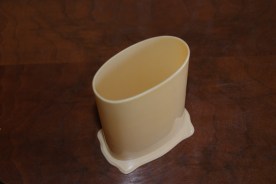
Not too long ago, I ran into this great vintage celluloid piece at a local flea market.  I know that it’s some sort of holder, but what exactly was it used for?

SONY DSC

In one reference book that I have, the book shows it and does not mention what this is.  Another book stated that it was a tooth brush holder, and yet another states that this is a holder for eyeglasses.

SONY DSC

Needless to say, I got pretty baffled on what this could be.  So here’s my question–what is this piece really for?  Is what one of the books said right, or is this something completely different?

Any information is greatly appreciated.  What do you think it is?

Two Cents worth? Yep

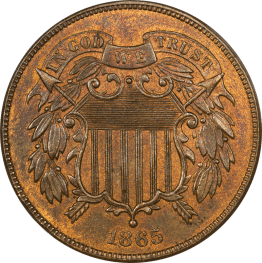
Did you know that there was actually a 2 cent coin that was produced by the United States mint?

The Two Cent piece officially ran from 1864 to 1872, but there was a copy made for collectors in 1873.

The economic turmoil of the American Civil War caused any and all government-issued coins to vanish from circulation, they were hoarded very heavily by the public. Even the Indian Head cent—which was made of bronze—was pretty much gone from circulation.  The Coinage Act Of 1864 authorized the cent to switch to a bronze composition and the production of the Two Cent coin.

800px-1865_two_cent_obverse
Photo courtesy Wikipedia.com

Even though there were other mints actively producing coins in the United States at the time, this coin was only produced at the mint based in Philadelphia.  What this means is that there will not be a mint mark anywhere–which is the way this mint was marking the coins until 1980.

Two of the more famous die varieties happened in 1864.  One is called the “large motto,” and the other is called the “small motto.”  These two varieties deal with the motto, “In God We Trust.”  The words IN, GOD, and TRUST has some small differences, while the word WE has the most differences.  It all hinges on the size of it, and it is very noticeable.  The WE on “large motto” is larger than the WE on the “small motto.”

The “small motto” is much scarcer than the “large motto.”  The best idea is to keep an eye out for it in case you might walk across a case full of coins at a mall, or happen to be at a coin shop or show.

Have you seen one of these really cool coins?

small-motto
Small motto courtesy Wikipedia.com
large-motto
Large motto courtesy Wikipedia.com

Sometimes directions help out with collecting paper money

Directions play a part in quite a few different ways in collecting, and this definitely includes collecting paper money from the early 1800’s.  During this time, it was up to the banks to produce paper money–they would file for a charter with the United States government, and this would allow the bank to produce their own paper money.

Collectors often look for paper money in a couple of ways for their collections.  They will look for a certain bank, city, or even state that the money was produced in.

If there was a major metropolitan area like Boston or Philadelphia, the more banks were likely to be there.  The east coast of the United States has quite a few different banks that offered paper money.  This was true going west to just past the Mississippi river.  The farther west you went, the fewer banks you would run into.

The gold rush in California that started in 1848 was what helped bring some banks (and eventually a United States mint in San Francisco) that far west.

When you travel up north (in places like North Dakota, Washington State, and even Alaska) they have very few banks at all.  There have been a few bills (collectors also call them “notes”) turn up for a few banks in these states, and are highly sought after.

You need to be careful when you are looking for paper money from the early 1800’s to add to your collection—there are quite a few outright counterfeit bills out there.  Not only that, there were also a lot of bills in circulation in the 1800’s that were counterfeit.  One reason was that there were many different designs that were made by the different banks out there making it harder for you to know if it was real or not when the bills were new.

Another reason is because there were a ton of banks that failed for one reason or another in the 1800’s (the money from these banks are also called “broken bank notes”).  There were lists for shut down banks and fake bills that circulated to merchants or vendors, but the lists were often out dated after a while.  It also took a while to get these lists circulated since mail had to go by stage coach, train or horse.

What fun direction can your collection go?

Three things to consider when you sell items online

When I first started to sell online, there were three things that I found out very quickly.  Here is what I learned:

#1 The price of the item itself needs to be considered.  When I list an item to sell online, what I try to do is to make double on what I paid for the item.  This way I can have a little wiggle room if something happens like paying a little more than expected on something like shipping.

#2 You will be charged listing fees on items you put on selling sites.  On a site like Etsy, they charge a small fee to renew a listing after the item is on the website after a certain amount of time (there is also a fee when you are listing the item for the first time).  You need to watch it like a hawk—this can add up pretty fast and eat into your profits.  After one or two renewals, you need to think about adjusting the price or doing something like taking better pictures.

#3 Packing costs also need to be considered.  The packing costs will include tape, packing peanuts, and potentially the box itself (if you don’t get free boxes from places like the Post Office).  If you do not watch this area very closely, you can completely wipe out any profits if you are not careful.

What have you learned when you started to sell things online?

Happy New Year from Wisdom Lane Antiques!

Did Santa leave a little extra cash for you in your Christmas stocking?  Wisdom Lane Antiques is offering a coupon code for 10% off the purchase price of any item!

From December 26th through January 1st, you can use the coupon code RETURN10 to get that discount.  We have a wide selection of antiques, collectibles, clothing and jewelry to choose from.

I hope that you have a Happy New Year!

What are some parts of a Ceramic piece?

When it comes to a ceramic piece, you can hear some pretty interesting vocabulary words that describe what it’s made of.  Here are some of the words that I have heard over the years:

Bisque – this is clay that has been fired once, and it is an unglazed piece.

Terra Cotta – it is a brownish-orange earthenware clay body.  It’s commonly used for ceramic sculpture or even architectural ornament.  It’s an Italian word that means “baked earth”.

High Relief—it’s a strongly raised or even deeply carved pattern.  This style of carving can get pretty detailed.

There are a lot of words that you will hear that describe what a ceramic piece is made of, or even a specific part of an item.  What kinds of words have you heard?

Dressing for New Year’s Eve

December 31 is a night for parties, dances and meals at fancy restaurants.  All of which require that special outfit.  What you need is one that doesn’t break the bank but makes heads turn.

Wisdom Lane Antiques can dress you from head to toe—and even provide a terrific coat for a finishing touch.

nygard

A coat that you can wear is this NYGARD COLLECTION Red Ladies Dressy Knee Length Trench Coat.  It’s a Size 6 and would definitely add a splash of color to any outfit.  You can see it in my eBay shop here.

There are several dresses that you can find in my eBay shop, like this CHELSEA NITES dress.

chlesea

The great thing about this pink hombre full length evening dress is that it has beaded accents on it.  You can see it in my eBay shop here.  As a matter of fact, you can see more evening dresses in my eBay shop here.

Another item that you can wear are these CHARLOTTE RUSSE shoes.

charolette-russe

This pair of Kidman Style Black Patent Leather High Heel Pumps are a Size 8, and they have the original box with them.  You can see this terrific pair in my eBay shop here.  You can see more heels in my eBay shop here.

I hope that you have a Happy New Year and make a lot of heads turn!

Year round use for Halloween Costumes

October 31 is for the kids to dress up and become a worst nightmare or even a bright star.  Why should it be over on November 1?  Why not get a large tub or box and fill it with a variety of costumes—superheroes, fantasy beasts, favorite storybook or movie characters—even grown-up dress-up looks.

There are a ton of costumes that you can put in that tub.  It could be a wide variety of character, or they can mix and match pieces.  One of the great costumes that you can use is this great ladybug costume.

ladybug

The great thing about the costume is that the ladybug antenna and wings are not attached to the dress, making this great to mix and match.  You can see it in my eBay store here.  Another costume that you could get is this Iron Man costume.

iron-man

The jumpsuit and the mask are separate pieces so that you can create your own robotic hero or villain!  You can see the great costume in my eBay store here.

Let the kids in your life use them year round—let their imaginations fly.  Perhaps put on plays for the grown-up audience in the house.  Better yet, why not join in on the fun with this great STAR WARS Princess Leia costume.

leia

You can see this terrific STAR WARS costume in my eBay store here.  You can also see all of the costumes in  my ebay store here.

What a great way to let the imagination fly!

A small slice of the different types of glass on the market

When you start to get into antiques and collectibles, you will find out there are a wide variety of items out on the market.  It could be just about anything, really.  It could be a specific item, or even a broader area like glassware.

Here are a few of the different types of glassware that I have heard about over the years:

Confetti—this is paper-thin elements of glass that can be worked into either a fused or blown glass piece.  Sometimes you will hear someone call this “shards” and you could find this in something like a paperweight.

Drapery Glass—this is glass sheets that has dramatic folds, kind of what you find in the hanging drapes of your house.

Millefiori Glass—this is an Italian word meaning “a thousand flowers.” This commonly refers to glass items that are made from a lot of murrini slices.

Beveled Glass—this is cold glass (usually a clear, thick plate of glass) with an edge that have been ground and polished to an angle other than 90 degrees. Light is refracted from this, and a prism-like effect is often the result. Bevels come in a variety of sizes, shapes and geometric configurations, which are called “clusters” that is incorporated into leaded glass work.  More often than not, you will find this in windows and even mirrors.

What other types of glassware have you heard about?