What are some glass terms for the beginning collector?

When you go out shopping for vintage items, you will hear some interesting terms being said.  It doesn’t matter if you are at an auction, estate sale or swap meets—you will hear something.  It really doesn’t take very long either to hear something interesting like “art glass”, “cased” or even “hand blown”.

Here are a few glass terms that you will hear along the way:

Ice lip—this is a part that you will find on a pitcher.  Ice lips are present to help hold the ice in the pitcher.

Applied handle—this is a handle that was attached to a piece of glass while the glass is still hot.  It is often done by hand and can be quite decorative.

Pontil mark—this is a byproduct of a piece of glass that is made by hand.  It is when the glass is attached to a rod so it can be turned into an item.  When the item is done, it is removed from the rod leaving the mark.

Acid etched—this is a type of finish to create a matte or even a satin finish to the glass.  It is often used to produce a pattern on the glass and can be found on a wide variety of items from bowls to glass panels used in architectural design.

Mold made—this is a type of glass that is completely formed using a mold.  You will see this with more of a mass-produced glass and it is used to help produce items that are exactly alike.

This is just a hand full of the terms that you will hear, and there are many more that you will run across.  What terms have you heard of?

What are some different types of pitchers that you might find?

When you get started shopping, you will run across a pitcher pretty fast.  You will be amazed how many different varieties there are.  You will quickly start to wonder what the different types of pitchers are.

This was one of the first questions that I ran across when I first started buying and selling antiques and collectibles.

Here are some of the most common ones that you will run across:

Iced tea pitchers—this type of pitcher is pretty large, they typically hold 64 ounces.  64 ounces is a standard size when it comes to Iced tea pitchers, but I have even seen that get close to 70 ounces.  Don’t let the words “Iced Tea” fool you—this type of pitcher has also been called a lemonade pitcher.  The great thing about these is that you will often find them with matching glasses.

Milk pitchers—this one actually threw me off when I first heard this one.  A milk pitcher is half the size of an Iced tea pitcher; it usually holds 32 ounces.  Why such an odd number you say?  32 ounces is how many ounces a quart milk bottle holds.  Milk pitchers are used to give a decorative look to the kitchen table when you are having breakfast.

Creamers—you don’t think of a creamer as a pitcher, but it does fall into this category.  This is the smallest of pitchers that are being talked about here, and they are usually 8 to 12 ounces in size.  One reason that you see quite a few creamers is the fact that you have a smaller serving size of milk when you are having a cup of coffee.

This is a small sample of what is on the market, and there are a few more types of pitchers that are out there.  What kinds have you heard of?

Go Listen to the new podcast!

Hello everyone! I wanted to let you know that Wisdom Lane Antiques has a new podcast, and it is called Pick For Profit!

At Pick For Profit, you will get tips about everything from setting up an antique booth to where you can find inventory that you can sell.

You can find the Pick For Profit podcast here. Head on over and check it out!

What in the world is a dummy stamp?

image courtesy of wikipedia.com

Many years ago, I attended an auction that sold a huge collection of both coins and stamps.  While I was watching the stamps sell, I heard many different vocabulary words that applies to the stamp collection world, and one of the words was dummy stamp.

So, what exactly is a dummy stamp?

A dummy stamp is an officially produced imitation stamp that is used to train employees.  It can also test automatic machines that dispense stamps.  This type of stamp is usually blank or carry special inscriptions or other distinguishing ornamentation.

In the United States, the Dummy Stamp term relates to test and training stamps.  You will see the term used in the United Kingdom more widely to include the promotional and even sample stamps that are produced by the printers.

Dummy stamps are not intended to be collected, but they do reach the hands of collectors by the postal employees that have access to them.

Have you ever run across a dummy stamp?

Glassware terms for the beginning collector

When you dive into the world of collecting, you will quickly find that there are a TON of terms that you will hear.  There could be anything from a service set to cheese dishes.

Here are some of the terms that you will run across when it comes to tableware:

Breakfast set—this set features both a sugar bowl and a creamer that match.

Frog—this is an element that has multiple holes in it that hold flowers upright.  This will be in a vase or console bowl, and they range from small to large in size.  They are also in any color from clear pieces to colorful Depression glass and even carnival glass.

Tumbler—this is an everyday drinking glass.  They have been seen both footed and unfooted, and they also run the gambit in color from clear to every color under the rainbow.

Spooner—this item can be mistaken for a sugar bowl since they are similar.  Spooners do not have lids and are taller than sugar bowls since they are designed to hold spoons.

This is a small portion of the terms that you will run across for tableware.  What terms have you heard?

What are some of the different types of pottery?

When you jump into the world of antiques and collectibles you will see a wide range of pottery that’s on the market.  It could be transferware, stoneware or even art pottery—you really never know what you could run across!

What are some of the different types of pottery that you will find?

Ironstone—this is a type of pottery that made its debut in the UK in the early 1800’s.  It is similar to fine stoneware and was developed by potters in Staffordshire England as a cheaper alternative for porcelain.

Agateware—this is a type of pottery that is decorated with a combination of clays that have contrasting colors.  The name of this type of pottery comes from the agate stone which has different colored layers in it.

Raku Ware—this is a type of Japanese pottery that is traditionally in Japanese tea ceremonies.  The pieces are fairly porous vesels that are a result from low firing temperatures and lead glazes.  The traditional process sees the fired piece removed from the hot kiln and allowed to cool in the open air.

This is a small portion of the different types of pottery that you will find on the market.  What types have you run across?

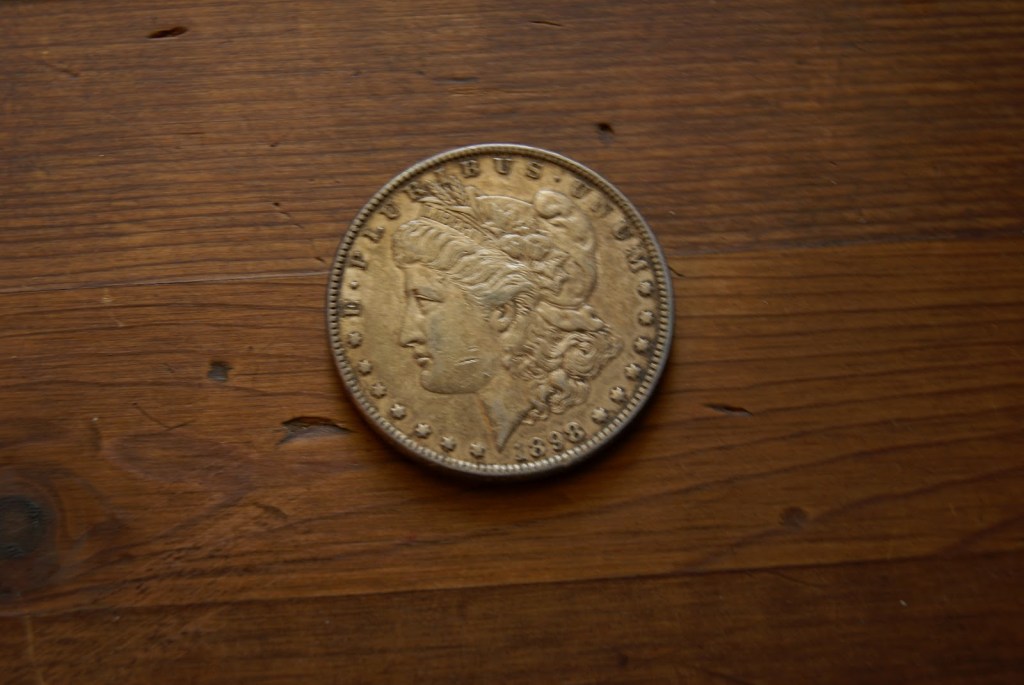
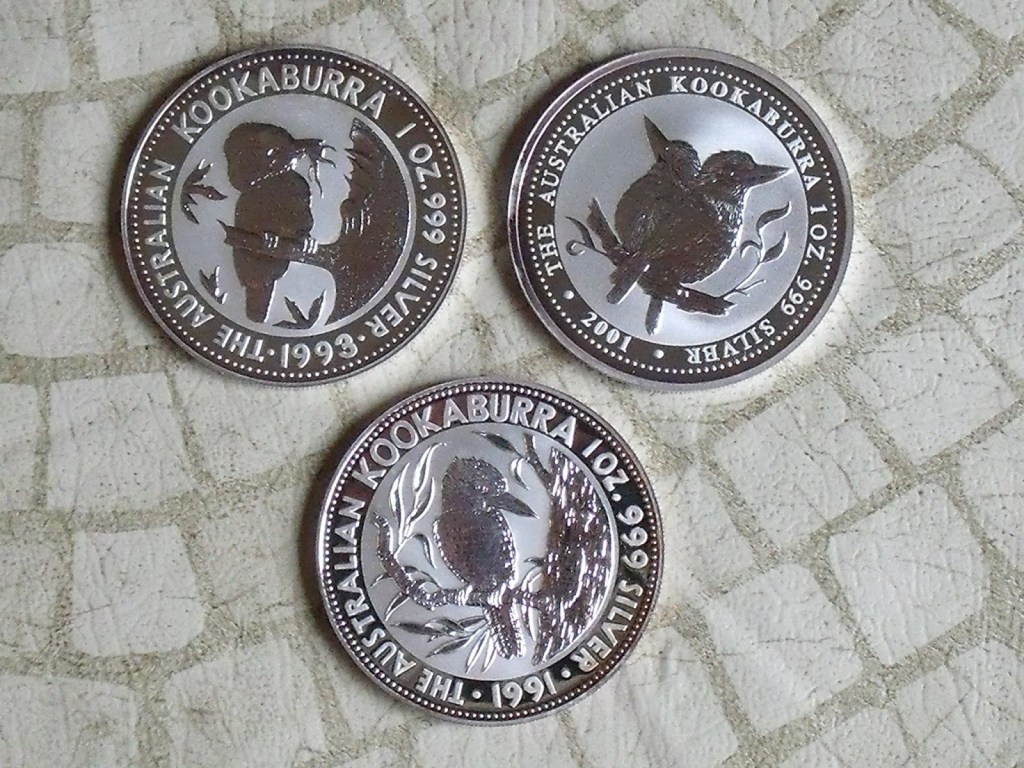
Great Ideas to invest some money in trying times?  Try silver coins

I have been collecting coins ever since I was a kid.  One of the first stories that I heard was that coin hoarding in the early 1800’s.

One of the reasons that led to this happening was the fact that the banking system was not the greatest.  There were plenty of banks that would open up for business and then be out of business within a couple of weeks or months.  Because of the very shaky ground that the banks were on, people were afraid that they would not get their initial deposits back (or anything at all for that matter).

Because of this, people started to hoard silver and gold coins (gold coins were in circulation until 1933 and they had a face value of $1, $2.50, $5, $10 and $20).  It got so bad at one point that the lowly little penny was even getting stockpiled.

The United States Mint (and mints from all around the world for that matter) still make pure silver coins, but they are geared more for collectors and investors alike.

With the price of silver going up, it only makes sense to set a few examples aside to watch them go up in value.  If you play your cards right, you can make a tidy profit on your original purchase price.

What are some of the different types of coins that are made?

When you start to collect coins, you will quickly find out that there are different types of coins that you can find.  The strike, what it’s made of or even the shape will quickly jump out at you.

Here is a few of the different types that you can find:

Business strike—this is a coin that is produced for general circulation, and you will find it in pocket change.

Commemorative coin—this is either a coin or medal that is issued to honor an outstanding event (like a bicentennial) or even a person (like Booker T. Washington).

Bi-Metallic—this is a coin that has been made out of two different materials like bronze and silver that have been bonded or fused together.

Proof—this is a coin that has been struck on a specially produced highly polished planchets and dies.  There are even proof coins that can be purchased that are struck more than once on the dies to help accent the design.This is a small look at some of the different types of coins that you can find.  What have you run across?

Madrid Depression Glass and its counterpart

The Madrid pattern has been around since 1932, and it is still being produced today.  The name of the pattern has been changed to the Recollection Pattern, and it is made by the Indiana Glass Company.  There are quite a few ways to tell if the piece you are looking at is a piece from the Madrid pattern or is part of the Recollection pattern.

In 1976, the Federal glass company released Madrid as part of their Bicentennial line.  To help discern this from the original, there is a “76” that has been stamped into the mold.  It is easy to spot due to the size of the numbers and that it is often located near the top edge.

The Indiana Glass company released the Recollection pattern starting in the 1980’s.  Some of the pieces that Indiana Glass has released were never produced by the Federal glass Company.  Some of the molds were even put together.  One example is the mold for the candlestick and fruit bowl were put together to produce a kind of pedestal bowl.  If you happen to run across one of these pieces, look at where the bowl joins with the “base”.  If you see some ribbing inside what looks like a hollow area, then this is a modern piece.

The grill plate is different as well.  The original has been divided into three compartments and the newer one only has two.It is amazing how much of both patterns are here in the Ozarks.  Keep an eye peeled when it come to this pattern—you just might be paying good money for a newer piece.

What are some coin terms that may make you think have different meanings?

For many years now, I have been collecting mainly United States coins.  When I first started collecting coins, I heard some terms that I thought meant something totally different.

Here are some of the terms that I have heard over the years:

Hairlines—this is not near your forehead; this is tiny lines or scratches that are more often caused by polishing or cleaning a coin.

Field—this is not something full of flowers, it is the portion of the surface of the coin that does not have any of the coin’s inscription.

Bust—the part of a coin that features a portrait on a coin.  The portrait features the head neck and shoulders.

Designer—this is not talking about a line of handbags—this is the artist who has created the coin’s design.

This is just a small handful of the words that you might run across when dealing with coins.  What have you heard of?