The not-so-famous furniture styles

There are the ultra-famous styles of furniture that everyone knows about (like Chippendale, Hepplewhite, or even Victorian) but did you know that there were quite a few styles that often were around with the more famous counterparts that are just not that well known?

The first one that I heard about that is like this is called DIRECTORIE.  It ran from 1795 to about 1804 and ran the same time as the Sheraton and Duncan Phyfe styles (the Duncan Phyfe style is also called the Federal Style).  Following the French Revolution, France was ruled by five directors.  Any and all signs of royalty were thrown out the window, and furniture design was controlled by a Jury Of Arts and Manufactures.  Greek, Roman, and even Egyptian influences are strong with the DIRECTORIE style.

The next style is called EASTLAKE and it ran from about 1879 to 1895.  It ran the same time that Late French Provincial and the Victorian Styles were going on.  This style was created by Charles Eastlake and achieved some popularity here in America and in England as well.  The style had some Gothic flair going on and had some Japanese ornamentation as well.  Cherry and Fruit were extensively used in the furniture of this style and had tile panels and conspicuous hardware that were used for decoration.

This is only a small portion of all the fantastic styles that I’ve heard of that really aren’t that well-known.  What kinds of styles have you heard of?

What are some items that you may not run across in a kitchen anymore?

The home kitchen is a place that you can find quite a few different items.  Over the years, there have been many items that have fallen out of favor for one reason or another.  It could be that a better version of an item that came out previously or it could be that a manufacturer introduced a completely new method to cook, chill or store an item.

What are some items that you may not run across in a kitchen anymore?

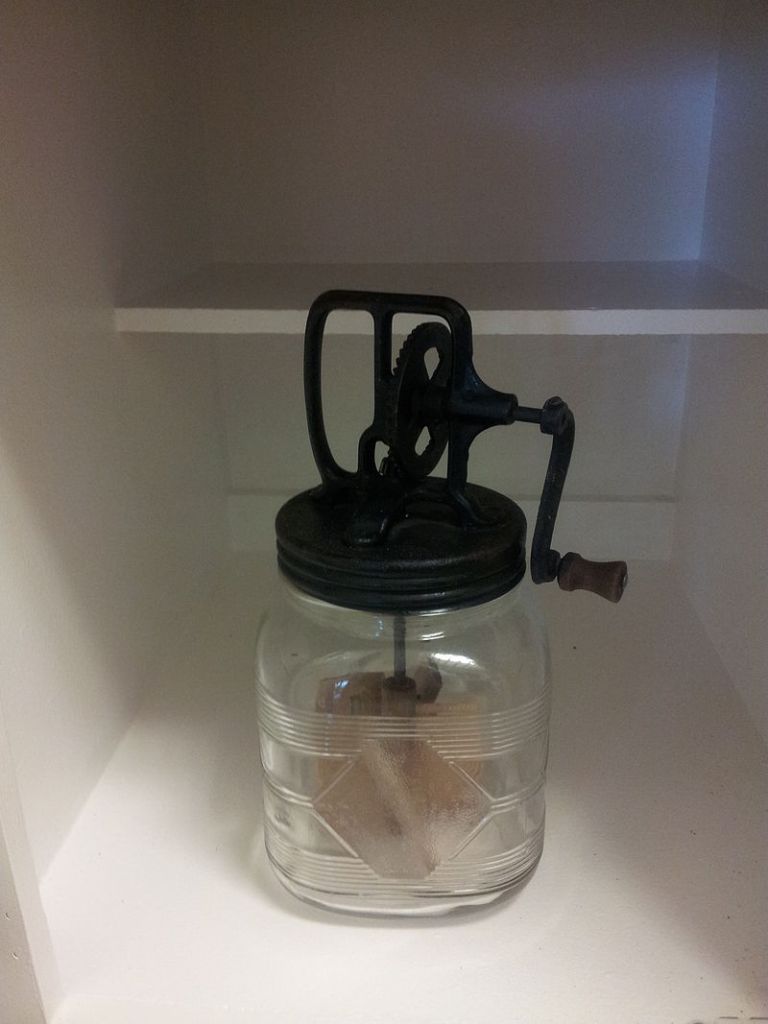
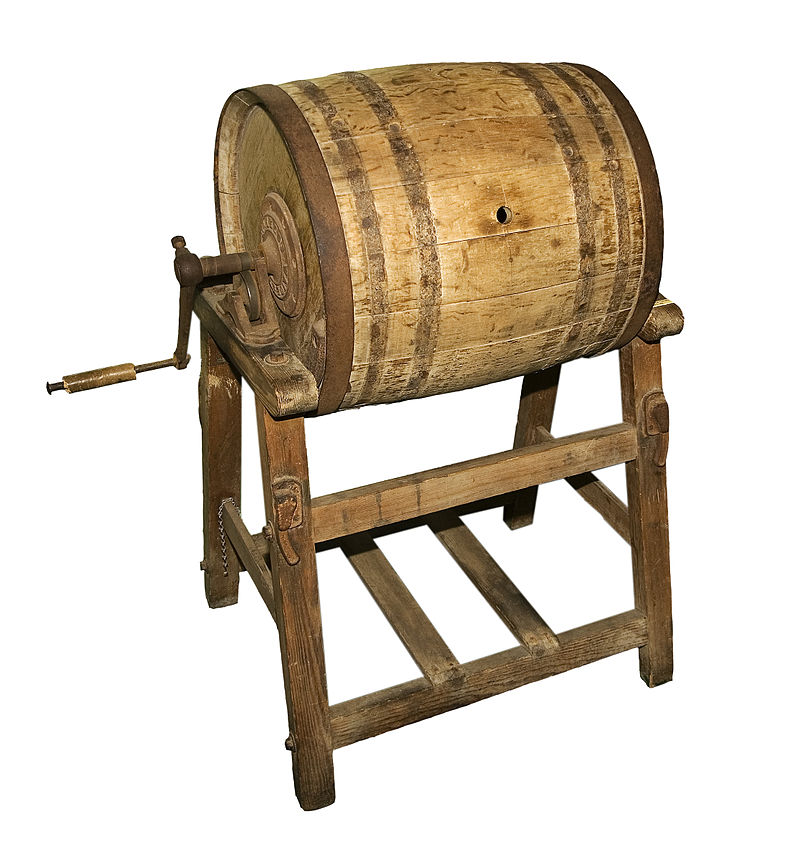
Butter Churns—this is a device that takes cream and turns it into butter.  There are several different types that you will find on the market—the first has a plunger inside that goes up and down while another is a hand crank that is attached to paddles on the inside.  I have also seen a barrel type that is on a stand that turns a good amount of cream.

hand crank churn photo courtesy of WIkipedia.com
plunger churn photo courtesy of Wikipedia.com
Barrel churn photo courtesy of Wikipedia.com

Crockery Pots—this item is for storage and it comes in a wide variety of sizes that could easily be stored on a table or shelf to one that holds several gallons.  You can find them usually with a number on them on how much they can hold.  This item was slowly phased out with metal and eventually plastic replacing them.

photo courtesy of Wikipedia.com

Cream Separators—this device does what the name says—it separates the cream from the milk.  This device was seen quite a bit on a farm in the late 1800’s to the early 1900’s.  Milk is now separated in industrial dairies.

photo courtesy of Wikipedia.com

This is only a few of the items that are not used anymore.  What items like these have you run across?

A Century Of Progress!

When the World’s Fair came to Chicago, it was called “A Century Of Progress International Exposition”.  It was originally to run from May 27th 1933 until November 12th 1933, but it was such a success that the Fair was opened again on May 26th the following year and ran until October 31st, 1934.

There were many exhibitors at the Chicago World’s Fair—some of the exhibitors were automobile manufactures (some of which are Cadillac, Nash, Pierce Arrow, Packard, and even Lincoln).  Another exhibitor was the Union Pacific Railroad, and they introduced their first streamlined train called the M-10000.

The Chicago World’s Fair of 1933-1934 has a vast area of souvenirs that you could collect.  There are programs, buttons, flyers, coins, badges, ash trays, photographs, tape measures (I’m not joking on the last one), banks, and the list just goes on and on.

I can find plenty of different items here in the Ozarks when it comes to collecting the Chicago World’s Fair.  The prices are all over the place, it really depends on how rare and well preserved the piece is.

The great thing about any World’s Fair is that every piece that came from it is marked with the year and the name of the Fair that it came from.

What kinds of collectibles have you run across from this World’s Fair?

Silent And Early Talkie Film Star MAE W MARSH

Mae W Marsh Was an American actress whose career spanned over 50 years.  Her career started out in silent movies, and then went over into “talkies.”  Her big break came when Mary Pickford refused to play the role of Lily-White in the movie “Man’s Genesis” (Mary Pickford was known for “Rebecca of Sunnybrook Farm” and “Cinderella”).

Picture courtesy of Wikipedia.com

Some of the movies that she stared in were “The Dear One,” “The Birth of a Nation,” “The Grapes of Wrath,” “How Green Was My Valley,” and even “When Kings Were the Law.”

She became such a famous actress that her image was featured on several items, including this plate:


The plate was produced in the 1920’s by the STAR PLAYERS PHOTO COMPANY.  This is a part of a series of plates that features other famous actors, like Charlie Chaplin.

The plates that I have seen have considerable wear to them, like they were actually used instead of just being admired.  I also have yet to see one without any chips on them as well (the one in my Etsy shop has a very small chip on the back).

The great thing about it is that it is a cross-collectible.  Pottery, collector plate, movie buffs, and even people who love Mae Marsh would love to have this plate in their collection.  Not only that, you could also display this in a retro kitchen in something like an old Hoosier cabinet.

What was your favorite movie that Mae Marsh was in?

Collecting Tip: Keep Your Eyes Peeled

Without a doubt, the fun of collecting is the hunt.  But don’t ever think that the hunt has to be relegated to thrift stores, antique shops, and auctions.  Sometimes, the hunt even comes to you.

Case in point: I was in high school when my local library retired its card catalog.  In conjunction with closing their catalog, the library offered patrons a giveaway: a free card signed by the author of the book.  The only catch was that you couldn’t request any specific author or book—it was the luck of the draw.

Not one to give up an opportunity for a collectible signature, I signed up.  And this is what I received:

I really did luck out with what I won—I’m a sports fan, and have always followed racing, so to get a card signed by Richard Petty was something of a thrill.

Now, what I have is a cross-collectible: I have a piece of sports memorabilia, a signed autograph from a celebrity, and a piece of library history (the card catalog has now gone the way of the dinosaur). 

Which just goes to show you: always keep your mind open, always be on the lookout.  You never know where you’re going to find those really cheap—or, in this case, absolutely free—pieces to add to your collection.

What about you?  Have you stumbled upon free goodies like this one?

What are some of the parts and pieces of vintage furniture?

Slipper feet, veneer and leafs are a small selection of some of the parts of a piece of vintage furniture that you will run across when you are looking at furniture.  You never know what you might find when you are out at an auction, estate sale or even an antique mall.  Here are a couple of pieces that you may run across:

Top rail—this is the horizontal rail at the very top of a chair back.  There are as many designs of a top rail as there are designer.

This photo is courtesy of Wikipedia.com

Manchette—this is an upholstered arm that is found on a wooden-frame chair.  This portion of the arm will be upholstered with the same material that the seat has.

This photo is courtesy of Wikipedia.com

Stretcher—this is a horizontal support piece that is found on a table, chair or other item of furniture.  This piece ties vertical elements of the piece together.  A stretcher can be seen in the bottom of the photo:

This photo is courtesy of Wikipedia.com

This is only a small portion of what you will run across.  What have you seen?

What exactly is a Capped Bust Coin series from the United States?

When it comes to the designs on United States coins, there are many different designs.  There are the Seated liberty coins and even the Barber coins series.  There are also coins that feature presidents, eagles, and roman numerals—there’s enough to make your head spin!

One of these designs is the Capped Bust series.  There’s one question that comes to mind about this design—what exactly is it?

Picture courtesy of Wikipedia.com

John Reich designed the capped-head concept of Liberty, and it was modified by the United States Chief Engraver of the Mint, William Kneass.

The design proved to be a popular one—it lasted several years on the circulating coins.  The half dollar ran from 1807 to 1839, the quarter’s design ran from 1815 to 1838, the dime ran from 1809 to 1837, and the half dime ran 1829 to 1837.

There was a capped bust design on the gold coins, and it is more popularly known as the “Turban Head”.  This name was because it had an unusual and exotic appearance, and this design ran from 1795 to 1834.

Picture courtesy of Wikipedia.com

The Capped Bust coin series is still very popular today with coin collectors, and this is but one of the designs that you will run across.  What designs have you seen?

What are some things to remember to help pick out a vintage item instead of a reproduction?

We have all been there before at some point—you find an item that you are looking for, and it has a price that you can afford.  The only problem is is that it’s a reproduction.  What are some tips that you can use to help you identify a real item instead a reproduction?

The first thing to remember is that age and wear can be faked.  One example is that linens can be soaked in coffee or tea to age them.  Another is that furniture can have wear added to it by hitting it with a heavy item over and over (like a chain) or using a sander to help add wear.

There are also times when reproduction Depression glass will have a different color than the real deal—I have seen reproduction pink have a kind of orange hue to it and a reproduction green that is too light.  I have also seen a pattern made in a color that it was ever issued originally (like the pattern ADAM by Jeanette Glass in Forest Green).

The Second thing to remember is to look at your surroundings and ask yourself a couple of questions.  Is there a large amount of the same item in one booth?  Is there plenty of the same item throughout the place you are shopping?  Is the item that you are looking for that is rare suddenly become plentiful?  All of these questions will help aid you in determining if the item you are interested in is the real deal.

The third thing to remember is to arm yourself with as much knowledge as possible.  One thing to do is to read as many reference guides as possible.  Another is to look at auction catalogs if possible—I have seen some tell a brief description on what makes the item for sale the real deal.  I also have seen vintage ads for items that I am interested in (this helps me determine a real item from a reproduction because the company used a photo of the item in the ad so I could compare the ad to the item).

This is just a couple of things to remember when I am trying to pick out the reproduction.  What tricks or tips have you heard of?

How do you start a collection?

When it comes to collecting, there are so many areas to start a collection in.  It could be baseball items, Roseville pottery, Fenton art glass or even stamps.  There are so many that it can literally make your head spin completely off.

Not only that, it can also be pretty daunting when you are new to the vintage and collectibles market.  What are some things to remember when you start out?

The first thing to consider is you need to decide what you want to collect. You might want to consider what your interests are weather it be coins, advertising items, glassware or even pottery.

The second thing to do is to do some research for your collection.  Before you buy the first piece, you need to know what to look for—when it was made, what it was made from and if there are reproductions are a good starting place.

While looking this up, look to see what the pieces you are interested in are selling for.  This will help give you a good idea on what to pay when you run across an item for your collection.

The third thing to do is to focus your collection.  Once you’ve made your choice, you need to narrow it down to the best that you can find.

Also, you need to remember to be patient!  When you are collecting, it’s a marathon and not a sprint.  You don’t need to rush out and buy all the pieces you can find.  Instead, slow down and enjoy the journey.

This is just some of the things to keep in mind when you start a collection.  What tips did you run across when you started a collection?

Vintage furniture pieces that can still be found being made today

There are designs of vintage furniture pieces that are still being made today.  I know this might sound weird, but it could be that the item is an extremely popular form or that it has found a new use.  Here are some of the designs that you might find:

Tuffet—this is a piece of furniture that’s used as a footstool or even as a low seat. It can be distinguished from a stool in that it is completely covered in cloth so that no legs are visible.  It is essentially a large hard cushion that could have been made with an internal wooden frame for rigidity.

Picture courtesy of Wikipedia.com

Cheval mirror—this is a large full-length mirror that is usually standing on the floor on its own.

Picture courtesy of Wikipedia.com

Writing desk—this acts as a kind of compact office. Traditionally, a writing desk is for writing letters by hand. It usually has a top that folds to hide current work (it also makes the room containing it look tidy).  The closing top may contain several joints so that it can roll closed or even fold closed.  They often have small drawers that are called “pigeon holes”.  Modern writing desks are designed for laptop computers (they are typically too small for most desktop computers or a printer).

Picture courtesy of Wikipedia.com

This is only a few of the pieces that you will run across.  What other kinds have you run across?