Wow, those are great flower vases to decorate with!

Flower vases can be as varied as the flowers that they can hold.  They can be made of a wide variety of materials like pottery and glass, and the color combinations are limitless.  Blue, gold, red and green are just some of the colors that you will see.

Like the materials and the colors, the companies that have made vases are countless.  Hull, Hall, Fenton and even Stangl are just some of the companies that have made an example.

One vase that would look terrific just about anywhere is this one by West Coast Pottery.

This cool gray and maroon fan vase dates to the 1950’s, and it is mold number 901.  You can check this vase out in my Etsy shop here.

Another vase that would look great holding flowers is this one that was made by Fenton from 1970 to 1974.
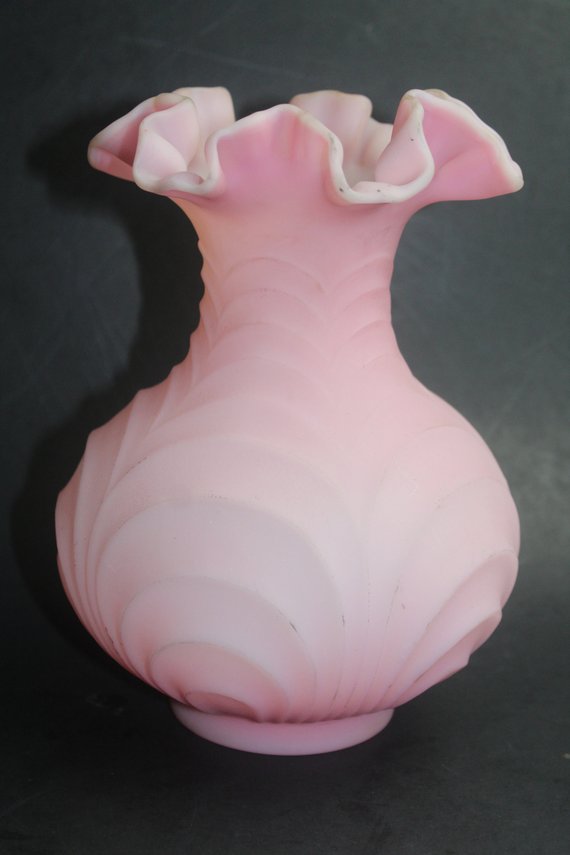
The vase has the Drapery pattern on it, and it has a color called rose satin. The vase can be seen in my Etsy shop here.

Another company that made quite a few vases is Hull Pottery. They made a wide variety of vases like this one from the 1940’s.
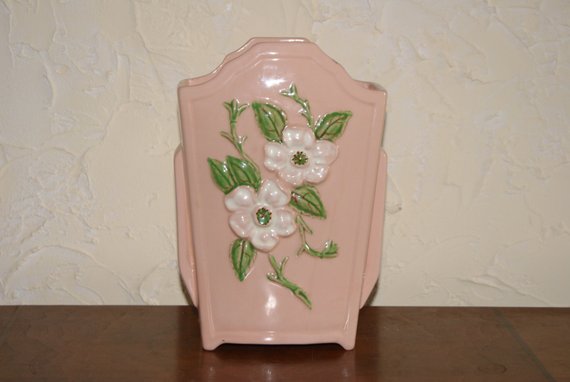
It sports the ROSELLA pattern on it, and the pattern looks like it sports Dogwood blooms.  You can see this terrific vase in my Etsy shop here.

As a matter of fact, you can see all the vases in my Etsy shop here.  Head on over and check them out!

Wisdom Lane Antiques Store Highlight: Joe Mattson Signed Art Glass Vase

This Wisdom Lane Antiques Store Highlight features a terrific art glass vase that was made by Joe Mattson.

Joe Mattson

Joe Mattson is a self-taught glass artist, and he began working in glass in 1976.

The shapes, forms and even the patterns he makes in glass are like those of the Art Nouveau era from the early 1900s.  The items that Joe Mattson makes in glass are primarily one-of-a-kind pieces that he calls contemporary traditional glass.

joe mattson bottom

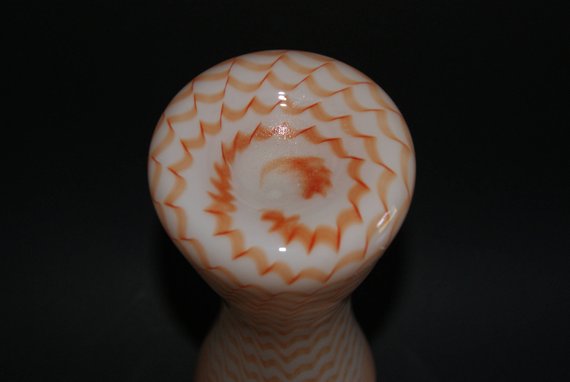
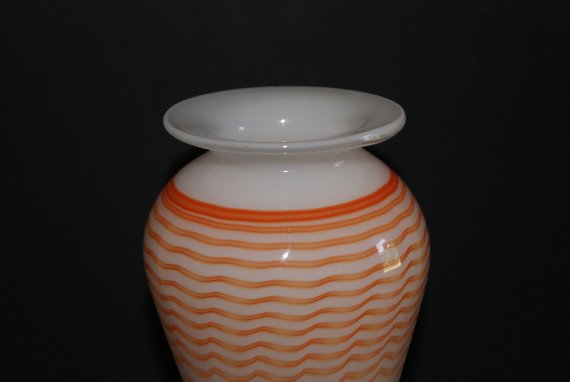
This terrific one-of-a-kind handmade vase has a white milk glass background with an orange zig zag pattern on it.  Not only that, it also has a flared top edge and a great hour glass shape to it.  I also like the fact that the top is not too small to where you can show off a good-sized bouquet of flowers in it.

joe mattson top

You can see this terrific signed Joe Mattson vase in my Etsy shop here.  Head on over and check it out!

Great examples of glassware serving pieces that you can find

When it comes to finding serving pieces for the table, you can find some great glassware items in a wide variety of shapes and sizes.  Tumblers, creamers and even plates are only a few examples that you can find.

One terrific example that you can find is this milk glass creamer.

1

Not only is it made out of milk glass, this terrific 1930’s creamer also sports a silverplate handle and spout.  To make things even better, it has a hand painted and embossed floral motif on it.  You can see this creamer in my Etsy shop here.

Another great serving piece that you could find is this great nut dish.

2

This great nut dish was made in the 1950’s by Westmoreland, and it sports a light blue satin mist color.  The dish also has an enameled floral motif on it, and it could also double as a candy dish.  You can see this dish in my Etsy shop here.

Cruets are perfect for your favorite salad dressing, and they can also be great to display on any table.  This pair would be perfect to do both.

3

This pair was made by Hazel Atlas in the 1950’s, and they sport a frosted look with a hand painted floral motif on them.  You can see them in my Etsy shop here.

As a matter of fact, you can see all of the great glassware serving items in my Etsy shop here.  Head on over and check them out!
Vintage furniture pieces that you may not run across everyday

When you are out and about shopping for vintage items, you will run across some vintage furniture that you may not know what it is.  Here’s a couple of pieces that you might run across:

Tallboy—this is a piece of furniture that incorporates a chest of drawers with a wardrobe on top.  The tallboy was considered to be the wardrobe of the 1700’s.

Highboy—this is a piece of furniture that consists of a double chest of drawers (it’s also known as a chest-on-chest).  This piece of furniture has a lower section that is usually wider than the upper section.

Pie safe—this is also referred to as a pie cabinet, pie safe cupboard, or even a pie chest.  It is a piece of furniture that is typically used to store pies.  The cabinet will have sections that consist of either pierced metal or screen to help the pies cool.  In the past, some people also stored meat, perishables, and other items inside of their pie safes.

Hoosier cabinet—this is also known simply as a “Hoosier”.  It is a type of cupboard (or even a free–standing kitchen cabinet) that also serves as a workstation.  It was popular in the first few decades of the 1900’s.  This was because most of the houses did not have built–in kitchen cabinetry.

This is just a few of the vintage furniture pieces that you may not run across everyday.  What other pieces have you run across?

READER’S HELP: that’s a friendly wall-crawling superhero…made from plaster?

When you start to dive into the world of antiques and collectibles, you quickly find out that you will find really cool things in unexpected places.

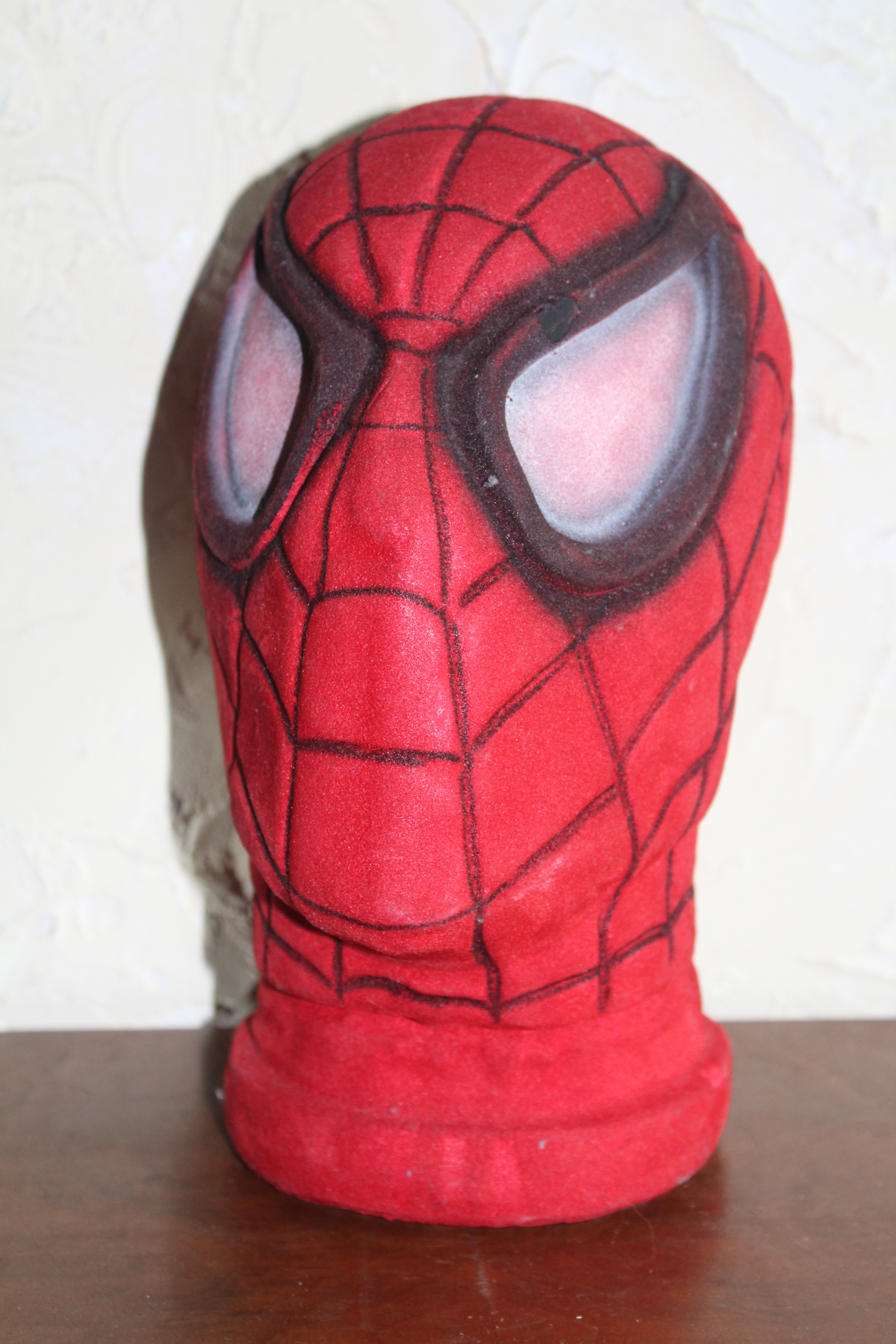
Not too long ago, this happened to me when I came upon a local garage sale.  And do you know what was there?  Just a bust of Spiderman himself!

Spiderman bank (1)

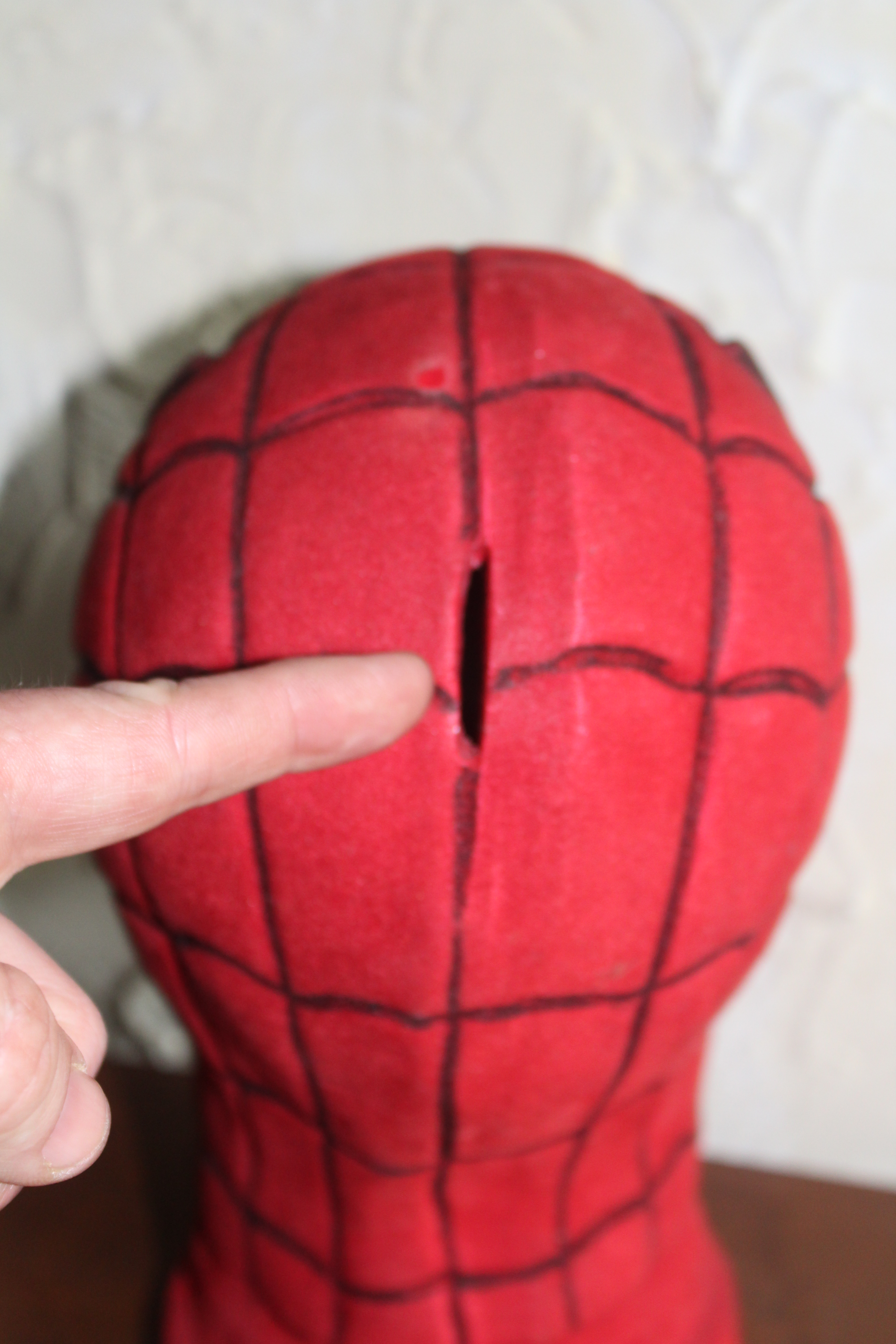
As you can see in the photo, the bust is made of plaster and it is also doubles as a bank (the coin slot is on the back of Spiderman’s head).  Not only that, it is extremely detailed—you can see and feel the ribbing in Spiderman’s mask, and it also feels like the head actually has cloth on it.

Spiderman bank (2)

Here’s the problem that I have with the bank—I know what it is, but I have no idea who made it.  I was told that it was made in Mexico, but there is no maker’s mark or even a country of origin mark on it.

Does anyone know who could have made this great bank?  Could it be a homemade piece that a fan of the character made?

Any information is greatly appreciated!

Grab yourself a cup and saucer, it’s tea time!

One of the areas that you can dive in and have a lot of fun collecting are cups and saucers.  They come in a wide variety of makers, sizes and even decoration.

Some of the materials that they could be made of are glassware, pottery or even fine china.  They could be decorated with just about anything–flowers, people and even outdoor scenes are just a small portion of what is out there.

Hocking Glass, MacBETH-Evans and even Royal Doulton are but a tiny portion of makers that have made cups and saucers, and there are many more.

One cup and saucer set that you could run across is this great Depression Glass example.

As you can see, it sports the CHERRY BLOSSOM pattern and is by the Jeanette Glass Company.  It was made from 1930 to 1939 and can be found in my Etsy shop here.

Hand painted examples are always fun for me, you will never find two that are exactly alike.  One cup and saucer set that fits in this area is this one by NAPCO Pottery.

This set features a yellow floral motif, and it dates to the 1950’s.  You can see it in my Etsy shop here.
Wedgewood also made several examples, and one such example is this terrific Mulberry handle less cup and saucer from the 1800’s.

It sports the WASHINGTON VASE pattern, and you can see it in my Etsy shop here.

There are quite a few ways that you can collect cups and saucers.Not only can you collect cups and saucers by the pattern that is on them or the manufacturer, you can also find examples that could go with a certain color combination that is in your house or apartment.

You can see all of the cups and saucers in my Etsy shop here.  Head on over and check them out!
What a great carnival glass plate from Fenton!

When the 1900’s rolled around, a new form of glassware was introduced.  Over the years, it has become to be known as Carnival Glass—and there is a wide variety of manufacturers, shapes and colors.

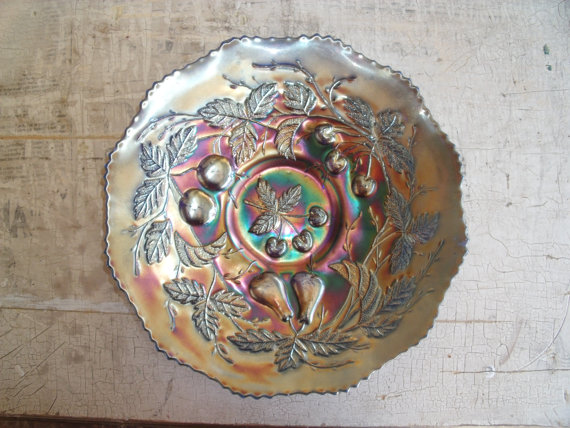
Carnival glass was at the height of its popularity in the 1920’s when Fenton produced this terrific 12-Sided Amethyst Footed Plate with the THREE FRUITS pattern.

3

This terrific item is called a 12-sided plate because of the edge that it has—not only does it have a scalloped edge, it has 12 noticeable segments to it.

The THREE FRUITS pattern that is featured on this plate are cherries, pears, and apples.  Not only is the amethyst color great for just about any room, the pattern will also look great as well.

This great plate can be seen in my Etsy shop here.  What other great carnival glass items have you run across?

Is that early movie star MAE W. MARSH?

Mae W. Marsh was a huge movie star in the 1920’s—going from silent films to talkies.  She made nearly 100 films in her lifetime, and her career spanned 50 years.  Some of these movies include THE LESSER EVIL (1912), THE ESCAPE (1914) and even TIDES OF PASSION (1925).

Mae was a prolific actress, sometimes appearing in as many eight movies a year.  She also became a very popular actress, and she was featured on this terrific plate by STAR PLAYERS PHOTO COMPANY.

Mae W Marsh plate

STAR PLAYERS PHOTO COMPANY produced this fantastic plate in the 1920’s.  This plate with Mae W. Marsh was part of a series by the company that featured other movie stars.  This series had Charlie Chaplin, Anita Stewart, Francis X. Bushman, Marguerite Snow, Alice Brady, Maurice Costello, Lottie Pickford, Lillian Walker and other actor and actresses.

All of the plates in this set features a floral border, and a picture of the star in the center of the plate.  They are also the same size—they are about the size of a dinner plate.

What a wonderful find for the film buff, and you can see this great plate in my Etsy shop here!

A good example of Czechoslovakian pottery

Pottery from the Czechoslovakian area in Europe is a great area to dive into and collect.  You can find great examples starting in the $10 to $15 area, and you can also find examples that are priced much higher.

You can find a wide variety of pieces on the market—cups, saucers, figurines, pitchers, creamers, sugars and even plates are a very small slice of what you can find.

One type of Czechoslovakian pottery (also called Czech pottery, a shortened name of the region it’s from) is this terrific hat pin holder from a company called ROYAL DUX.

royal dux

It was made from 1918 to 1930’s, and it has a cream background and a red trim, and it also has an embossed flower motif with pastel colors.

Royal dux marks

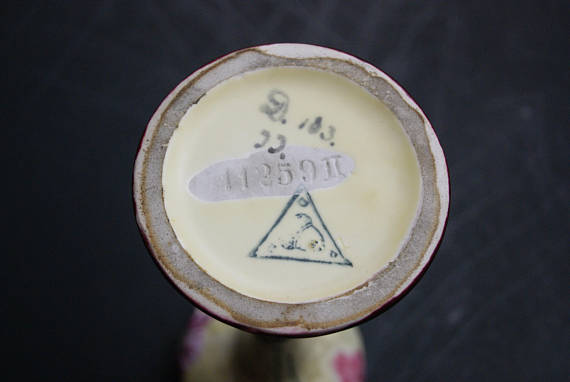
The marks that are on it are the DPM mark with an acorn at the center (this stands for DUXER PORZELLAN-MANUFAKTUR), and it also has an embossed mark that reads 11259 II (these marks help date the hat pin holder from 1918 to the 1930’s).

The hatpin holder is also the perfect size to be used as a small vase (or even a bud vase).  It would also look terrific on any table or even a desk.  It would definitely be the center of attention in any room that it’s in!

The vase can be seen in my Etsy shop here.  Head on over and check it out!

Different names of furniture that you might run across

There are many different names of a certain furniture item (or a certain part of that piece of furniture) that you will run across.  There will be times that it will literally make your head spin on what the word could mean.

Over the years, I’ve noticed that furniture definitely has its own vocabulary.  This is especially true when you are dealing with items from overseas.  There are many places in Europe that have made furniture, so you will run across words that are from another language.

You never know what you may run across, and here are some of the words that you may scratch your head over:

Pietre Dure—this is decorative work that uses inlaid, semi-precious stones to depict scenes.  These scenes are geometric patterns, floral motifs, farm scenes, and many more.  More often than not, you will see this on a table top.

Lit de repos—this is a day-bed.

Gueridon—this is a small, round table. It was made to support a candlestick or even a candelabrum.  It could almost get away as being called a side table.

Gesso—this is made from a composition material, it’s often made with chalk and parchment.  It’s made in a size that is commonly applied to furniture, picture frames and even mirrors.  This is a base upon which gilding (or even silvering) was applied to.

Coquille—this is a seashell or scallop shape.  The shape will often be seen on the top of a table or chair leg.

This is just a small sample of the vocabulary words that you might hear.  What have you heard?