
When it comes to taking some photos of an item that is going to be for sale, there will be some things that you will do to make sure the photos come out alright.
You will make sure that the item is well lit in the photos, any damage will be photographed, and you will even put a prop with the item to give a size comparison to. But what about the background?
If you think about it, the background will often get ignored when you take some photographs. The background will play as big of a roll as the rest of the photograph. Look at the two photos and compare them to each other—do you notice the difference?
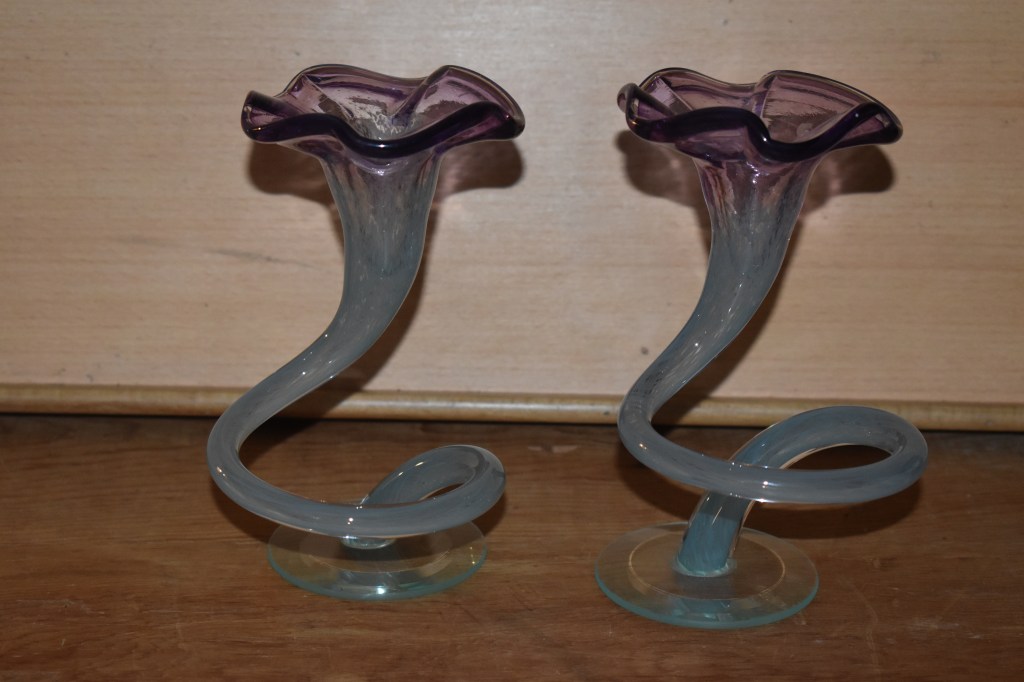

The most glaring thing about the two photographs is the background. More importantly, the color of the background. It makes the pair of Murano candleholders look completely different, almost like they are two completely different sets.
The best piece of advice that I can give you when it comes to the background is that you need something that doesn’t overpower what the star of the show should be. One of the things I do is to go with a lighter color than the item that I am photographing.
Another thing I do is I might stage the photograph and make it place that they are designed for, like on a kitchen table. You can even go so far and put a plate and some silverware between you and the candleholders so you can show the potential buyer what it might look like in their home.
These are just a few tips that you can use when you take your photographs for the items you are going to list for sale. What are some of the tips and tricks that you have come up with?


 Wisdom Lane Antiques