![]()
I wanted to let everyone know that there is a new shop in town!
Wisdom Lane Antiques can now be found on the RUBY LANE, and it can be found here.
Head on over and check it out!
![]()
I wanted to let everyone know that there is a new shop in town!
Wisdom Lane Antiques can now be found on the RUBY LANE, and it can be found here.
Head on over and check it out!
When you are out and about shopping for vintage items, you will run across some vintage furniture that you may not know what it is. Here’s a couple of pieces that you might run across:
Tallboy—this is a piece of furniture that incorporates a chest of drawers with a wardrobe on top. The tallboy was considered to be the wardrobe of the 1700’s.
Highboy—this is a piece of furniture that consists of a double chest of drawers (it’s also known as a chest-on-chest). This piece of furniture has a lower section that is usually wider than the upper section.
Pie safe—this is also referred to as a pie cabinet, pie safe cupboard, or even a pie chest. It is a piece of furniture that is typically used to store pies. The cabinet will have sections that consist of either pierced metal or screen to help the pies cool. In the past, some people also stored meat, perishables, and other items inside of their pie safes.
Hoosier cabinet—this is also known simply as a “Hoosier”. It is a type of cupboard (or even a free–standing kitchen cabinet) that also serves as a workstation. It was popular in the first few decades of the 1900’s. This was because most of the houses did not have built–in kitchen cabinetry.
This is just a few of the vintage furniture pieces that you may not run across everyday. What other pieces have you run across?
When you start to dive into the world of antiques and collectibles, you quickly find out that you will find really cool things in unexpected places.
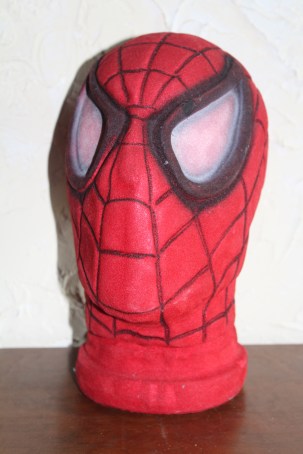
Not too long ago, this happened to me when I came upon a local garage sale. And do you know what was there? Just a bust of Spiderman himself!

As you can see in the photo, the bust is made of plaster and it is also doubles as a bank (the coin slot is on the back of Spiderman’s head). Not only that, it is extremely detailed—you can see and feel the ribbing in Spiderman’s mask, and it also feels like the head actually has cloth on it.

Here’s the problem that I have with the bank—I know what it is, but I have no idea who made it. I was told that it was made in Mexico, but there is no maker’s mark or even a country of origin mark on it.
Does anyone know who could have made this great bank? Could it be a homemade piece that a fan of the character made?
Any information is greatly appreciated!
It will not take long for you to run across a wide variety of colors that you will find on glass. There are so many in fact that the variety will make your head spin! Here’s a couple of colors that you will find when out shopping for antiques:
Burmese glass—this is a type of colored art glass that shades from yellow to pink. Burmese glass is found in either the rare original “shiny” finish or the more common “satin” finish. Burmese is a uranium glass—the uranium is to help with the color of a piece, and it will glow bright green under a black light.
Carnival glass—carnival glass is a molded or pressed glass. It always is found with a pattern and always has a shiny, metallic iridescent finish to the surface.
Black Amethyst–black amethyst glass appears to be a black color until it is held to a bright light source. Once held to a light source, you will then be able to see a dark color. The glass has been made in many factories from 1860 to the present.
Millefiori Glass—this is an Italian word meaning “a thousand flowers.” This commonly refers to glass items that are made from a lot of murrini slices.
This is only a small portion of the assorted colors of glass on the market. What have you run across?
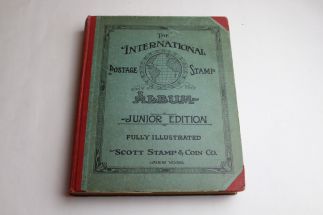
What a cool gift idea for a stamp collector—finding them a vintage stamp album to accompany their collection. One album that you can find is titled “The International Postage Stamp Album Junior Edition.”

This album is great, it is by the Scott Stamp and Coin Company. Not only does it have the look of a regular book, it has space dedicated to have stamps from many countries of the world. Some of the countries that are included are the United States, Austria, Bavaria, Germany, Cuba and even Hungary (there are many other countries that are not listed here).

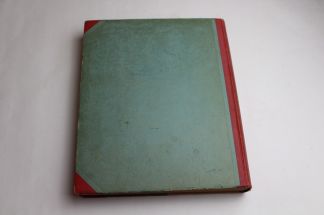
There is a copy of this book in my eBay shop—not only does it have all of its pages, it also has some stamps with it. There are about 150 stamps in total that are included, and they range in date from 1876 to the 1920’s (two of the stamps from Hungary are OVERPRINTS from 1919).
You can see this book in my eBay shop here. Head on over and check it out.
Wow, how great is this? Remember when stamps were 1 cent?
One of the areas that you can dive in and have a lot of fun collecting are cups and saucers. They come in a wide variety of makers, sizes and even decoration.
Some of the materials that they could be made of are glassware, pottery or even fine china. They could be decorated with just about anything–flowers, people and even outdoor scenes are just a small portion of what is out there.
Hocking Glass, MacBETH-Evans and even Royal Doulton are but a tiny portion of makers that have made cups and saucers, and there are many more.
One cup and saucer set that you could run across is this great Depression Glass example.

As you can see, it sports the CHERRY BLOSSOM pattern and is by the Jeanette Glass Company. It was made from 1930 to 1939 and can be found in my Etsy shop here.
Hand painted examples are always fun for me, you will never find two that are exactly alike. One cup and saucer set that fits in this area is this one by NAPCO Pottery.


It sports the WASHINGTON VASE pattern, and you can see it in my Etsy shop here.
There are quite a few ways that you can collect cups and saucers.Not only can you collect cups and saucers by the pattern that is on them or the manufacturer, you can also find examples that could go with a certain color combination that is in your house or apartment.
You can see all of the cups and saucers in my Etsy shop here. Head on over and check them out!
As long as I can remember, people have been on the lookout for items that were once in use in gas stations. Gas pumps, signs, vending machines and even advertising from a certain brand (like Marathon or even Phillips 66) have been sought after.
I have even heard of people collecting items from the lesser known gas station companies as well, like ElReco. I am going to be honest with you—I never heard of ElReco until I found this paperweight.

It turns out that Elreco stands for the Eldorado Refining Company. They operated out of El Dorado, Kansas until the company was sold to the K-T Oil Company (they maintained operations there after the sale).
When 1958 rolled around, that company was sold American Petrofina, and the stations were then renamed to the FINA brand.

This paperweight was made in the early 1900’s, and it still has a good amount of the original paint on it. The great thing about this paperweight is that it’s a perfect size so that it can be used anywhere from your desk to holding down a recipe in the kitchen.
You can see this terrific paperweight in my Etsy shop here. Head on over and check it out!
When I started selling glassware, I quickly found out that any glassware that had color to it sold better than its crystal counterpart. Opalescent glass, forest green and amberina glass were colors that I have heard, but what exactly are they? Here’s a description of some of the more common glass colors that you will hear:
Amberina glass—this is a type of art glass that has a color that goes from amber (or even a yellow color) to ruby on the same piece. This shaded effect is due to the gold being added to the glass when it is being made.
Cameo glass—this is a type of glass that has layers of glass that have contrasting colors. The outer layers are either acid-etched, carved, cut, or even engraved to produce a design. Since the layers are different colors, this will help the design stand out from the background.
Opal glass—this is glass that resembles an opal. Opal glass will be a translucent and white, and it will also have a grayish or bluish tinge to it.
Cranberry glass—this is a type of glass that is made by adding gold salts or colloidal gold to molten glass (tin is sometimes added as a reducing agent), and this makes the glass turn a pink color.
This is only a small example of some of the glassware colors that you will run across when you are out shopping. What colors have you run across?
When I started to sell items online, one of the types of sale that I found are estate sales. When you go to an estate sale, the contents of the house are usually for sale. I have heard them referred to as a tag sale and even an estate liquidation.
Estate sales are a wonderful way to find some bargains, but what are some tips to remember when you attend one?
The first thing to remember is that all sales are final. You need to be careful with this—check everything carefully for damage and to see if any electrical items that you are interested in work. When you attend a sale, you will most likely see signs that read either ALL SALES ARE FINAL or even one that reads ALL ITEMS ARE AS IS / WHERE IS.
The next thing to remember is to bring cash. The people that are running the sale may not have the ability to run a credit card or accept your check.
Another thing to remember is to bring the muscle. You may need to load a very heavy piece, like a piece of furniture.
The last tip to remember is that there will be times that you can get a discount on the price of the item you are interested in. The estate sale company that runs the sale will usually have the sale over a couple of days. The first day will usually be full price while the second day will have 10 to 25 percent off and the third day could be as much as half off the price.
When I go to an estate sale, I am now in the habit of seeing if there is a discount the day I attend.
This is only a few of the tips to remember when you attend an estate sale. What kinds of tips have you run across?
In 1862, the United States was smack dab in the middle of a coin shortage. It was bad, really bad. Everything was being horded—even the cent was being stockpiled.
An American entrepreneur and inventor by the name of John Gault created something to help with this—the encased postage stamp.
The encased postage stamp is a stamp that was inserted into a small coin-size case. This case has a transparent front or back. This type of “coin” was circulated as legal tender during periods when coins were scarce.
John Gault was pretty savvy—he saw two ways to make money off of his creation. The first way was to sell them to businesses and stores that had a high demand for coins. He sold his encased stamps at 20% of the face value of the stamp.
The second way that he made money was to sell the blank back of the case of the coin as advertising. There is a minimum of thirty different companies that took up the advertising on the coins. All of the different companies lend to find some great and different varieties on this type of coin.
Encased postage stamps circulated for about a year (until about the middle of 1863). This is when the fractional currency released by United States Government became popular enough to help ease the coin shortage.
There were also some other factors that helped bring encased postage stamps to an end. One reason was was that the postage stamps that were being used for this started to become unavailable. Not only that, it cost more to buy the encased postage than what they were actually valued at in the market.
Encased postage stamps are rare today with a small fraction of the 750,000 that were originally sold surviving.
This is just one item people came up with over the years to help with coin shortages over the years. Do you know of any other ways?