A fun find that proves you never know what you will run into

Every one in a while, you will run across a fun find that proves you never know what you will find while shopping for vintage and collectible items.

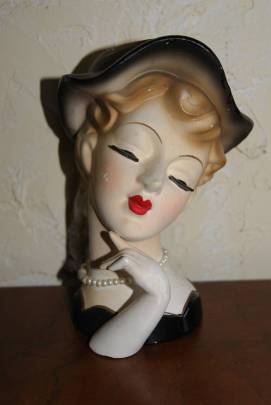
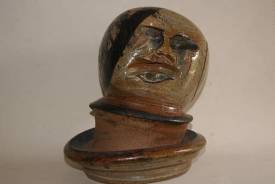
This is definitely one of those items.  I ran across this folk art item at a local garage sale and immediately fell in love with it.

0

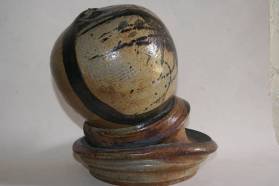
As you can tell, this folk art sculpture is in the shape of a head.  It dates to the 1980’s and it looks like someone took quite a bit of time sculpting it with all of the facial features (plus all of the time it took to make sure this sculpture didn’t fall apart).

1

What is also great about it is the glaze that was applied to it–it looks like someone had a lot of fun decorating it.

You can see this great sculpture in my Etsy shop here.  Head on over and check it out!

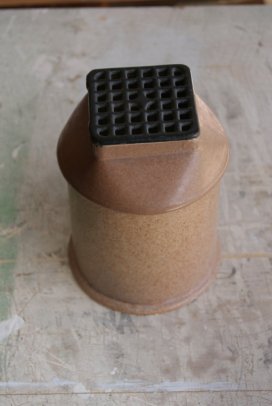
What are the different types of manufacturing for enamel advertising signs?

Just about every area of antiques and collectibles can be divided into several different sub categories.  It could be collecting the denomination or country of origin of coins, a certain glass company or pattern, or even a certain type of manufacturing process like majolica pottery.

This is true for enamel advertising signs, and one of the ways you can do this is the style of manufacturing of the sign itself and how it can be displayed.

The first type is a flat one-sided sign.  This style has advertising on just one side of the sign, and this would be perfect to attach to a wall or the front of a building.  With only one side having the advertising, the back will have just one color of enameling.

The second type is called a flat two-sided sign.  This style has advertising on both sides of the sign, and most of the time this type of sign will be in a stand or frame of some type to help see both sides.

The third type of sign is a flanged two-sided sign.  This type of sign has a built-in 90-degree angled mount on it that allows the sign to come out from a wall or even a side of a building.

The next type of sign is called a curved sign.  This sign will have a curve in it to go around items like a telephone pole, a street light or even the corner of a building.

Another type are gasoline pump signs, and they will advertise the brand of gas that it is.  Not only are there gasoline pump sign examples for automobile gas, there are also some examples known for marine and aviation gas known as well.

The last example is called a neon porcelain sign, and this type has neon lights on it.  This type of sign can light up and you can see the sign better at night, and the most notable type is on a movie theater.  You could also find this hanging in a window of a business.

What types of enamel advertising sings have you run across?

What you need to know when you set up an antique booth

You start to look around the house and you notice that you have quite a few things that you have collected that you now want to sell.  You know that the items are too expensive for a garage sale, and you don’t have the time to list the items for sale online.

What do you do now?

A booth in an antique mall or a flea market is a wonderful way to help you make some money and clear out some of those things that you have around the house.  There are some things that you need to know before for jump into renting a booth.

The first thing you need to do is to find the perfect place for you to set up a booth at.  This could be at a place that you love to shop at or even heard of.  The best thing to keep in mind is to see if that place has a pretty good amount of foot traffic going through it.  This will help you have more potential sales.

Another thing you need to know is if the antique mall or flea market requires you to stay a certain amount of time.  It’s rare for this to happen in the area that I live in–you can shut down the booth after just one month if you want to.

More often than not, you will need to pay for your first month’s rent on the booth.  I’ve seen the rent cost anywhere from $35 for a small booth or showcase all the way up to $300 for a large booth.

The place that you want to rent a booth at may charge you a commission on every item you sell.  You need to ask if they do, and even how much the commission is (I’ve seen it around 10% of the selling price of the item).

You might be able to opt out of the commission; the mall might charge you a little more on the rent of the booth to cover this commission.

The mall will require you to have a number—this will help the mall separate out who sold what.  This will be done the day that you set up the booth, but don’t worry—the mall will have a list of what numbers the other dealers have so there is no confusion.

A word of advice—look to see what kind of tags the dealers are using (a piece of tape may not be wanted at the mall).  One thing that I have seen a lot of is a piece of paper cut into a small square tied on with twine or ribbon.

Good luck and lots of sales to you!

What are some of the benefits of getting an item appraised?

You have a piece of jewelry from your grandmother, your dad’s vintage comic book collection from his youth, or even a piece of furniture that you picked up at an antique mall.  You know that the piece has value, and you are not sure if you want to get an appraisal on it.

What are some of the benefits of getting an item appraised?

There are several benefits when it comes to getting an appraisal.  The first reason (and probably best) is that it helps tell you the value of the item that you have.

The second reason is that it helps clear up any confusion on what the item is.  You could have heard several stories from the family, and each story identifies the item (or items) completely differently than what it actually is.

Another reason is that the appraisal helps you know if your item is real or not.  A good rule of thumb is to try to find someone who appraises items on a regular basis like what you have.  This will help with both the value and authenticity of the piece that you have.

When it comes to jewelry, the appraiser has equipment that helps determine what the types of stones that you could possibly have.

Another good benefit on appraisals is that you could also get everything written out telling what the item is.  This will also help with insurance (if it’s needed on the item).

What other types of benefits have you run across when you got an appraisal on an item you have?

Here’s some fun facts about PEZ dispensers

One of the things that I remember having around during my childhood is a PEZ dispenser.  The Hulk, Garfield and even Spiderman were some of the dispensers that I had, and nothing could beat that cherry flavored candy.

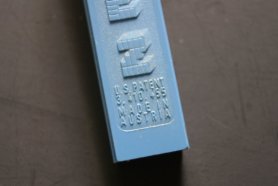
PEZ candy was first produced in Vienna, Austria in 1927.  The candy was first advertised as a compressed peppermint sweet, and PEZ is actually an abbreviation for PfeffErminZ (that’s German for peppermint).  These candies came in a tin that looks like what Altoids come in today.

When the dispensers came about, they were not always called that.  They were called “regulars”, and they looked a lot like a cigarette lighter.  They dispensed an adult breath mint that were marketed as an alternative to smoking.

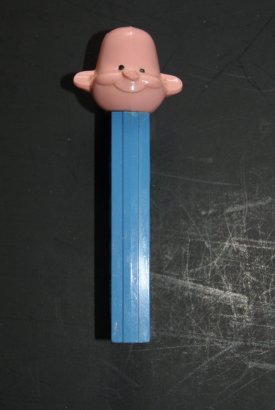
When 1955 rolled around, the dispensers started to have character heads on them, and this happened after PEZ was introduced in the United States.  One example of these character heads is this POLICEMAN dispenser.

pez man

As you can see, the dispenser should have a police hat on it, but has been lost over time.  Over the years, PEZ has made dispensers with and without feet.

pez feet

As you can tell from the picture above this great example has no feet, and you can see this dispenser in my Etsy store here.

What kind of PEZ dispensers have you had?

Fun Fenton items that you may not know they made!

When it comes to Fenton, I always think of certain pieces or patterns—it could be a silvercrest vase, any piece with the hobnail pattern, and even a Fenton lamp.

There are fun pieces that I have run across that I wouldn’t think of being produced by Fenton.  The first one is this terrific paperweight.

clown

It has a clown motif and it sports the Iridescent Rose finish. It dates to the 1970’s, you can tell by the paper label that’s on it.  You can see this paperweight in my Etsy shop here.  Another fun item is this terrific vase.

blue oddesy

This FENTON INTERNATIONAL vase is from the  Blue Odyssey Collection, and it has the DECO CIRCLES pattern on it.  I love the shape of it—it’s a design that you don’t see everyday!  You can see this vase in my Etsy shop here.

Another fun item that you may not think of is this great ginger jar.

ginger jar

This great Fenton Blue Opalescent Coin Dot Three Piece Ginger Jar (it has the lid, jar and stand) is big—it’s 8 ¼ inches tall!  What threw me off from this being a Fenton piece was the fact that it is a ginger jar.

You can see this terrific ginger jar in my Etsy shop here.  As a matter of fact, you can see all of the Fenton items I have for sale on Etsy here.  Head on over and check them out!

You can also see another Fenton blog post that I have here.

What kinds of fun Fenton items have you run across?


Look at all the assorted colors that glass has been produced with!

When you look at the area of glassware, you will see many different colors and finishes that the glass was made with.  There are as many distinct color combinations as there are manufacturing techniques.  Here’s a few of them that you will most likely run across:

Cased Glass—this is glass of one color that has been covered with one or more layers of assorted colors. The outer layers are then acid-etched, carved, cut, or even engraved to produce a design.  This design will stand out from the background, and will have a kind of raised motif when done. The first cameo glasses were made by the Romans in ancient times, and the genre was revived in England and America (to a lesser amount) in the late 19th century.

Flashed Glass—this is glass that has one color with a very thin applied color on the outside (like crystal glass that has a cranberry color applied to it).  This technique is accomplished by applying a chemical compound to the glass and then re-firing the piece to bring out the desired color.  Flashed glass is often used for etched glass (the flashing will be applied after the etching is completed).

Gilding—this is the process of decorating glass using gold leaf, gold paint, or even gold dust. There are examples that have the gilding applied with mercury (it’s called Mercury Gilding.  It’s rarely done today due to its toxicity).  The gilding is then usually attached to the glass by heat.

Peachblow—this is a type of Art Glass made by quite a few American factories in the late 1800’s.  Most Peachblow glass has a coloring that shaded from an opaque cream to pink (or even red), sometimes even over an opaque white.  There was a similar glass that was made in England (it was by Thomas Webb & Sons and even Stevens & Williams).

This is only a small sampling of what has been made.  What kinds of colored glass have you run across?

What exactly is the ART DECO style?

You hear the phrase ART DECO quite a bit in the world of antiques, but what exactly is it?

Art Deco got its start in France just before World War 1, and the style ran from about 1910 to about 1939.

Philips_930
Photo courtesy of Wikipedia

People also call Art Deco just Deco, and it’s short for Arts Decoratifs.  It combined several assorted styles—it was influenced by the lines of Cubism, the bright colors of Fauvism (this was a painting style) and even exotic styles from Asia.  Persian, Egypt styles and even Maya art had some influence on the Art Deco style.

club chair
Photo courtesy of Wikipedia

Its influence could be seen on just about everything—buildings, furniture, jewelry, cars, fashion, trains and even everyday items like toasters.

You can see the style around today—you can see it on buildings like the Chrysler Building in New York.

chrysler building
Photo courtesy of Wikipedia

And you can even see it on the Prometheus Statue in Rockefeller Center in New York.

prometheus

Photo courtesy of Wikipedia

What are some things to remember when you go shopping for antiques?

Whenever you go shopping for antiques, there are always a few things that you need to remember.  The first thing that you need to keep in mind is what kind of budget that you have.  What I do so that I don’t go over my budget is to write down on a piece of paper how much my bill will be.

Another thing to remember is to keep an idea (or even a list) on what you are looking for.  It could be a lamp for your living room, a carburetor for your Indian motorcycle or even a Morgan dollar for your coin collection.  I often look in reference books or on the internet to see how much the item that I am looking for will cost so that I know what to expect to pay.

The next thing that I do is to figure out where I would like to go.  You may have several antique stores, flea markets and even swap meets that are pretty close to home, so you could hit several of them in one day.

The last thing to do is to throw a box or a sack into your car or truck.  It might sound silly, but I have one when I go shopping—you may be at something like a garage sale or even a swap meet and need to pack something in it.

The best rule of thumb of all is to have fun!