What are some do’s and don’ts when you attend an estate sale?

You have attended a local auction and even have gone to some antique shops and even thrift stores that are near you.  So what is the next thing that you want to go to?  An estate sale!

Now that you have decided to take the plunge and attend an estate sale, what are some do’s and don’ts to keep in mind when you attend one?

The first thing to remember is that the company holding the sale may be limited to space in the house.  If they are, the company will limit the amount of people inside the house at one time to help with overcrowding.  The sale company will let in a certain amount at by doing something like handing out numbers to help with this.

Another thing to remember is not call or email ahead of time to get the price of an item you are interested in.  I have seen this happen several times when I am at a sale, and I have never seen the company give the price out.  This takes time away from the sale company from either running the sale or setting it up.

The next thing to remember is to respect others at the sale.  Cutting in line either waiting to get into the sale or to pay is one way to anger fellow customers.  Another way is to grab things out of another person’s hands that they are interested in and walk away with it.  These are a few of the jerk things that I have seen happen at sales that shouldn’t go on.  The thing to remember is to treat people the way you want to be treated.

This is just a small handful of do’s and don’ts when it comes to attending an estate sale.  What do you do when you attend a sale?

How do you find items to sell online?

One of the more common questions that I am asked is how I find items to sell online.  Some of the more common places to find items are estate sales, auctions and even flea markets are common, and you can even find items at local thrift stores.

So where are some other places that that I find items to sell online?

Did you know that you can even find items in junkyards?  The obvious items to be found there are car parts.  I have seen other items like enamel signs, wire baskets and even gas pumps hanging out in junkyards.

I have also found items to sell on the curb of my own neighborhood that my neighbors set out at the curb for free.

The clearance isle of a store is a good possibility of finding items as well.

These are just a few ways to find items to sell.  How have you found the items you sell?

What are some of the different types of pottery?

When you jump into the world of antiques and collectibles you will see a wide range of pottery that’s on the market.  It could be transferware, stoneware or even art pottery—you really never know what you could run across!

What are some of the different types of pottery that you will find?

Ironstone—this is a type of pottery that made its debut in the UK in the early 1800’s.  It is similar to fine stoneware and was developed by potters in Staffordshire England as a cheaper alternative for porcelain.

Agateware—this is a type of pottery that is decorated with a combination of clays that have contrasting colors.  The name of this type of pottery comes from the agate stone which has different colored layers in it.

Raku Ware—this is a type of Japanese pottery that is traditionally in Japanese tea ceremonies.  The pieces are fairly porous vesels that are a result from low firing temperatures and lead glazes.  The traditional process sees the fired piece removed from the hot kiln and allowed to cool in the open air.

This is a small portion of the different types of pottery that you will find on the market.  What types have you run across?

It happened in 1947

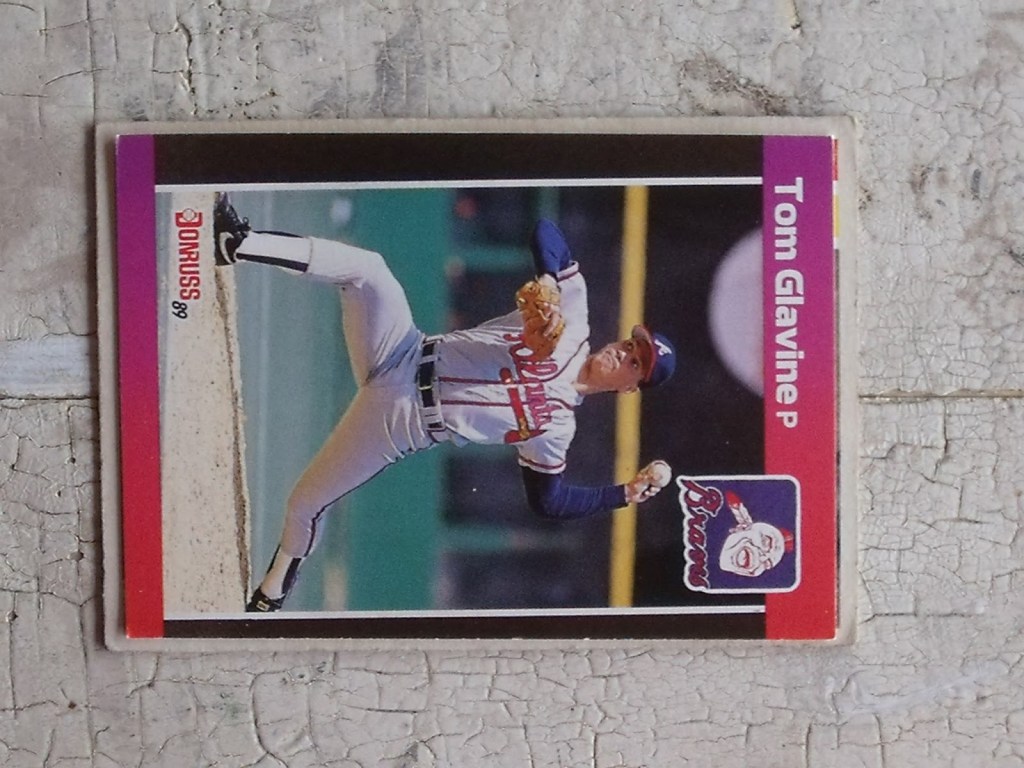
It happened on April 15th, 1947, and it happened to be a Tuesday.  The first day of Major League Baseball is a day that people always look forward to, but this year was special.  Spring was in the air, the smell of hot dogs was wafting around, and Jackie Robinson was making his Major League debut.

When Jackie Robinson took the field on this day, he became the first African American to play baseball in the majors.  He succeeded in every way possible, and he eventually found his way to Cooperstown (this is the home of the Baseball Hall of Fame).

When it comes to the collectibles area that features either Jackie’s name or likeness, it is very wide-ranging.  It includes everything from hats to jerseys, ads or even bats and gloves (this doesn’t even begin to cover how much is out there).

One of the areas that is very sought-after are baseball cards.  Not only are they easy to store, but they can also command a very pretty penny.

The downside of the collectibles that feature Jackie Robinson is that there are plenty of reproductions or fantasy pieces on the market that you will run across.  You need to do your homework to see what an authentic piece looks like so that you don’t get taken for a ride.

One of the best ways to tell if the card pictured above is authentic is to look for the TOPPS copyright information on the card.  One of the best areas to find it is on the back of the card where the players stats are.  Another way is to look at the paper stock that the card was made of.  For 1956, TOPPS used paper stock that had no sheen to it, and the card itself is a little bigger than modern cards.  If you have a question about a certain card, lay a modern card over it to compare the sizes.

The picture above shows what to look for about the size differences on the cards.

What kind of Jackie Robinson collectibles have you run across?

Tips to remember when you are buying inventory

When you are new to the world of buying and selling, you may not know where to buy inventory for your business.  What are some tips to remember when you are out and about looking for deals?

It might sound like I’m pulling your leg, but I keep an eye out for inventory wherever I am.  You never know where you might be when an item might turn up.  I have literally found items that people are giving away by the curb of a street that I have turned around and sold.

Carry pocket change—it can be a life saver.  When the summer rolls around, I throw a couple dollars’ worth of change in my pocket.  It is always welcome by the people running the sale.

Poke around online.  You can find cheap inventory for sale, even with the shipping added in.  You can also look online at websites like Craigslist for items that might be for sale that you could pick up and then sell.

This is just a handful of things to remember when it comes to buying inventory for you to sell.  What tips have you run across?

Weeding out the reproductions

Homeowners this time of year begin to get rid of lawn weeds in hopes of having a lush green yard.  Likewise, shoppers need to learn to “weed out” those items which typically show up on flea market and antique shelves this time of the year.

Weeds are what I like to call reproductions, and they can be quite convincing.

It could be an advertising sign that is rusted and looks to be ever so real.  Damage to the corners, fading to the paint, and even dents are all applied to a brand-new sign to help make it look older than it is.

There’s glassware on the market that copies Depression Glass and art glass patterns.  It is so convincing that the pattern and the color are the spitting image of the old items.  There are some manufacturers that have figured out how to make a piece of glass “glow” in a black light like the old stuff without using Uranium.

Brass imports such as spittoons or candle holders already come with tarnishing.  Wooden boxes and furniture furniture that is hammered, faded and well-used are also plentiful without much looking around.

So, buyer beware and do your homework!  You can never have too much information when it comes to antiques—it always comes in handy.

What’s in a maker’s mark on pottery?

There’s a ton of pottery out on the market that you will run across, but how do you know what’s what?  And how do you read the mark on the bottom of the piece to know what you have in your hands?

Here are a few things to keep in mind when you are looking at a mark:

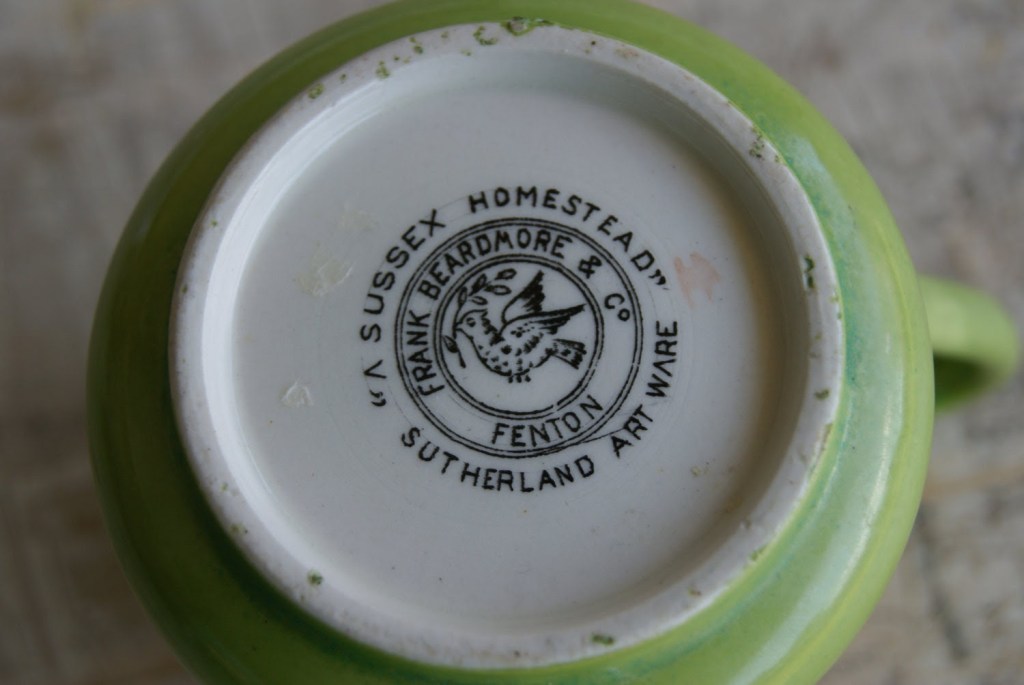
A maker’s mark will run a wide variety on how much information it will give you.  It could be just the name of the name of the company, or it could be loaded with information like the Frank Beardmore piece pictured above.  Since 1891, all pottery that is made to be exported (especially into the United States), it must be stamped with a country of origin near the maker’s label.

With artist’s being hired on by the pottery companies to hand paint some items, the artist could sign their name to the piece as well.  I have seen an artist signature to either the bottom of the piece or on the side of the piece (I would look near the bottom of the piece to see if the artist signed there).

There are times that the name of the pattern is written on the bottom of the piece as well.  The Frank Beardmore creamer’s pattern is called “A Sussex Homeland” and the name of the pattern is listed at the top of the mark on this piece.

A good tip to remember is that the marks on pottery are not that hard to decipher; it just takes about a minute to figure out how the maker laid out the mark.

What kinds of pottery have you found something out by looking at the mark?

What are some places for you to get inventory to sell online?

When you start to sell items online, you will run across a question that could stump you—where can you go to find inventory?  Garage sales, estate sales and even auctions are popular ways to find inventory.  Here are some of the other places that you can go to find inventory:

Church sales are a good place to go because there will be a large amount for you to look at.  Not only that, but there will also be a wide variety of items that you will run across.  This type of sale is usually a fundraiser for something like a mission trip or do raise money to do something at the church, so there is a great chance that the price of the item will be low.

Goodwill is also a great place to go to find inventory.  Not only is there the regular store, but Goodwill also has outlet stores where you can buy it by the pound.  I can’t tell you how many deals I have bought there—it’s one of my favorite places to go.

Moving sales are a lot like going to a garage sale.  The main difference between the two is that a moving sale is where they are getting rid as much as possible so they can move and not take it with them.  There have been moving sales that I have attended where I have seen the seller even give items away.

Going out of business sales are probably overlooked by some.  I have bought everything from tools to sports jerseys and even home decorations at this type of sale, and I have also seen clothing racks, shelves and even light fixtures for sale.  Not only can you get items to sell online, but you can also get what you need to get organized while you sell.

This is a small sample of places that you can go to find inventory to sell online.  What are some of the places that you have gone too to find inventory?

Common etiquette to keep in mind while antique shopping

Whenever I am out and about at an antique mall or flea market, there are some basic rules of etiquette that I follow.

Here are a few of them:

Put items back where you found them.  You picked up an item with the intention to buy it, and along the way you decided not to.  That’s more than fine—make sure to put it back where you found it.  Antique malls and flea markets have booths for dealers to stock with their items—this way the dealer gets their items back.

If you happen to bring a drink in with you, see if it is ok to bring it in with the people that run the shop.  I have run across several shops that don’t allow food or drinks in the front door.

Make sure that you follow the golden rule of antique shopping—buy what you like when you see it.  If you let it go, it might not be there when you come back for it.

And remember to watch where you walk and keep an eye on your large bags or purses that you bring with you.  There is one rule that I have seen stores enforce quite a bit—you broke it, you bought it.

This is a small handful of the common etiquette that you will run across while antique shopping.  What have you run across?

What a truly odd bird!

Goofus glass was made in the early 1900’s and was the first type of carnival glass giveaway because it was relatively cheap to make.  Plates, bowls, vases (like the one above), and even oil lamps were made in mass quantities.

The glassware was also made with highly decorative patterns like the one on the vase above.  The pattern on the vase featured here is called, “Odd Bird Sitting On A Grape Vine.”  The bird on the vase looks like it could have come out of a comic book!

The great thing about goofus glass is that it comes in a wide variety of colors form what’s on the vase to red, gold and even green.  With a wide variety of colors and shapes, you could find the perfect piece and color combination for any room.

One thing that you need to keep an eye on is the paint itself.  Since the paint was not fired on, it tends to flake off.  So if you are patient, you will find a piece of Goofus Glass with all of its original paint intact.

Another thing that’s great is that goofus glass can be seen from flea markets to swap meets to even antique stores and shows.  You never know what you’ll find where!

What kinds of patterns and pieces of goofus glass have you found or run across?