Reader’s Help: What in the world is this Celluloid piece?

SONY DSC

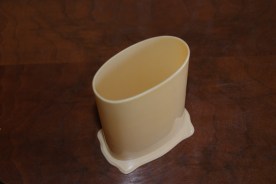
Not too long ago, I ran into this great vintage celluloid piece at a local flea market.  I know that it’s some sort of holder, but what exactly was it used for?

SONY DSC

In one reference book that I have, the book shows it and does not mention what this is.  Another book stated that it was a tooth brush holder, and yet another states that this is a holder for eyeglasses.

SONY DSC

Needless to say, I got pretty baffled on what this could be.  So here’s my question–what is this piece really for?  Is what one of the books said right, or is this something completely different?

Any information is greatly appreciated.  What do you think it is?

Two Cents worth? Yep

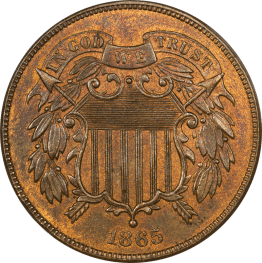
Did you know that there was actually a 2 cent coin that was produced by the United States mint?

The Two Cent piece officially ran from 1864 to 1872, but there was a copy made for collectors in 1873.

The economic turmoil of the American Civil War caused any and all government-issued coins to vanish from circulation, they were hoarded very heavily by the public. Even the Indian Head cent—which was made of bronze—was pretty much gone from circulation.  The Coinage Act Of 1864 authorized the cent to switch to a bronze composition and the production of the Two Cent coin.

800px-1865_two_cent_obverse
Photo courtesy Wikipedia.com

Even though there were other mints actively producing coins in the United States at the time, this coin was only produced at the mint based in Philadelphia.  What this means is that there will not be a mint mark anywhere–which is the way this mint was marking the coins until 1980.

Two of the more famous die varieties happened in 1864.  One is called the “large motto,” and the other is called the “small motto.”  These two varieties deal with the motto, “In God We Trust.”  The words IN, GOD, and TRUST has some small differences, while the word WE has the most differences.  It all hinges on the size of it, and it is very noticeable.  The WE on “large motto” is larger than the WE on the “small motto.”

The “small motto” is much scarcer than the “large motto.”  The best idea is to keep an eye out for it in case you might walk across a case full of coins at a mall, or happen to be at a coin shop or show.

Have you seen one of these really cool coins?

small-motto
Small motto courtesy Wikipedia.com
large-motto
Large motto courtesy Wikipedia.com

Three things to consider when you sell items online

When I first started to sell online, there were three things that I found out very quickly.  Here is what I learned:

#1 The price of the item itself needs to be considered.  When I list an item to sell online, what I try to do is to make double on what I paid for the item.  This way I can have a little wiggle room if something happens like paying a little more than expected on something like shipping.

#2 You will be charged listing fees on items you put on selling sites.  On a site like Etsy, they charge a small fee to renew a listing after the item is on the website after a certain amount of time (there is also a fee when you are listing the item for the first time).  You need to watch it like a hawk—this can add up pretty fast and eat into your profits.  After one or two renewals, you need to think about adjusting the price or doing something like taking better pictures.

#3 Packing costs also need to be considered.  The packing costs will include tape, packing peanuts, and potentially the box itself (if you don’t get free boxes from places like the Post Office).  If you do not watch this area very closely, you can completely wipe out any profits if you are not careful.

What have you learned when you started to sell things online?

Better keep an eye out!

Whenever I am going through a flea market or even a local thrift store, I often remind myself that I need to keep my eyes peeled—you never know what you will run across.  It could be anything really, it could be any type of item that you didn’t expect.

This happened to me not too long ago when I went to a local Goodwill store.  I was walking through and saw, well…

SONY DSC

SONY DSC

SONY DSC

When I first saw it, I knew that it was a scaled down house.  It looks like someone took a lot of time to make it, but the real question was rather simple—what was it really?

After looking at it for a little bit, I had part of the roof come off of the house in my hand, kind of like what’s pictured below.  I quickly realized that this was a jewelry box.

SONY DSC

SONY DSC

Talk about a fun way to store your jewelry!  So, it always pays to keep an eye peeled so you don’t miss that one-of-a-kind item.

What kinds of interesting finds have you run across when out at a flea market or antique store?

More vocabulary words for the glass collector to keep in mind

When you start to collect items in a certain area like glassware, you find out that you need to know some of the terminology when you go along.  Here’s some of the words that I’ve heard over the years about glassware:

Bent (or Slumped) Glass—this is glass that has been heated up in a kiln from room temperature to a temperature high enough to cause it to soften and sag into or even over a mold. The finished product will take the shape of the mold that the glass is around.

Iridescent—this is a surface treatment when a layer of metallic oxide is bonded to the hot glass surface just after the form the glass into a sheet.  The result is a colorful one, and it also has a shimmering effect.

Seedy Glass—this is glass that has air bubbles trapped in it. This is when air or gas is injected into the molten glass prior to forming the sheet causing the bubbles.

What kind of terms have you heard or run across?

How do you sell items on the internet that have flaws in them?

How do you go about selling items on the internet that have flaws in them?

This is actually one of the more popular questions that I get asked.  There are several ways to sell an item that has flaws in it, and the first one is the most obvious—sell it as is.  Selling the item like this could be that it can be repaired or restored to original condition.

Another way that you can sell the item is to sell it with another item that is just like the damaged one.  Right now, I have a Fenton match holder that I am selling like this (and you can see the listing here).

SONY DSC

If you have a crafty side, you can turn it into something completely different.  It could be something like a non-functioning kerosene lantern.  You could electrify it and put a retro looking bulb (or even a normal low wattage one) in it.  After you do this, you can display it on a side table or the corner of a desk.  Another idea could be turning a run down book rack that you have around the house into a wine rack.

One thing that I have seen people do is to combine several items together to make something new.  I was at a local flea market shopping when I saw a yard ornament in the shape of a sunflower.  The flower top was made out of a broken plate and recycled scraps of thin wood (the wood came from a broken Coca Cola crate).

No matter how you sell the flawed item, you need to provide plenty of clear pictures.  This way any potential buyer can get a good view of the item.

The other thing that you need to do is to provide a well-written description of the item.  This way the potential buyer knows what’s going on with the piece, and even what you did to it.

How have you sold items that have flaws on them?

What do you do when you attend an auction?

So you have decided to go and see what goes on at an auction.  You scouted out the perfect one, and have even showed up about 30 minutes before it started.  Now what do you do?

The first thing that you need to do is to register to get a bidders number.  More often than not, the auction company will have a special area set up for just this purpose.  All that you need to is to show the auction company a valid ID and supply a phone number, and you have a biding number.  What this is for is to let the auction company know who you are and even able to contact you if something arises (like if something that you bought gets left behind).

Whenever I have attended an auction, this will only take a few minutes at most, and it doesn’t cost me anything to do so.

The next thing that you will want to do is to look at the merchandise that’s in the sale.  Getting to the auction a few minutes before it starts will help you look over the items to see what’s there and to see what kind of condition that it’s in.

Make sure that you listen to what the auctioneers say at the very beginning of the auction when they make their announcements.  This will let you know what will happen during the course of the auction and what will be sold first.

So have some fun when you go to auctions and see what’s out there!