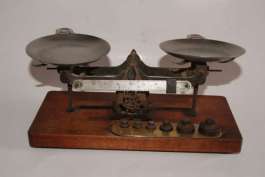
Hey, that’s a cool Eastman Kodak Photography Studio Scale!

Photography is an area that has a huge amount of collectible items.  It could be cameras or even the photographs themselves.  Companies even produced glass containers that held the chemicals to develop the photographs, and even these containers are sought after to decorate with.

But what about collecting and decorating with something like a studio scale?

scale

One of the companies that produced a scale like this was EASTMAN KODAK.  EASTMAN KODAK made this terrific photography studio scale from 1912 to 1948.  It was made to help you weigh exactly how much chemicals you needed when you were developing your photos.

The reason you needed to weigh the chemicals because they were stored separately from each other.  This was to help keep everything as fresh as possible (and to help you you use only what you needed).

This scale would look terrific on any desk, or even with other photographic equipment!  You can see this terrific scale in my Etsy shop here.

What other types of photographic collectibles have you run across?

Reader’s Help: What in the world is this Celluloid piece?

SONY DSC

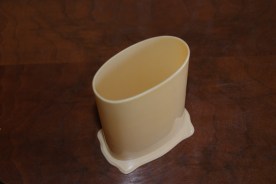
Not too long ago, I ran into this great vintage celluloid piece at a local flea market.  I know that it’s some sort of holder, but what exactly was it used for?

SONY DSC

In one reference book that I have, the book shows it and does not mention what this is.  Another book stated that it was a tooth brush holder, and yet another states that this is a holder for eyeglasses.

SONY DSC

Needless to say, I got pretty baffled on what this could be.  So here’s my question–what is this piece really for?  Is what one of the books said right, or is this something completely different?

Any information is greatly appreciated.  What do you think it is?

Two Cents worth? Yep

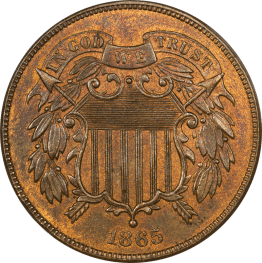
Did you know that there was actually a 2 cent coin that was produced by the United States mint?

The Two Cent piece officially ran from 1864 to 1872, but there was a copy made for collectors in 1873.

The economic turmoil of the American Civil War caused any and all government-issued coins to vanish from circulation, they were hoarded very heavily by the public. Even the Indian Head cent—which was made of bronze—was pretty much gone from circulation.  The Coinage Act Of 1864 authorized the cent to switch to a bronze composition and the production of the Two Cent coin.

800px-1865_two_cent_obverse
Photo courtesy Wikipedia.com

Even though there were other mints actively producing coins in the United States at the time, this coin was only produced at the mint based in Philadelphia.  What this means is that there will not be a mint mark anywhere–which is the way this mint was marking the coins until 1980.

Two of the more famous die varieties happened in 1864.  One is called the “large motto,” and the other is called the “small motto.”  These two varieties deal with the motto, “In God We Trust.”  The words IN, GOD, and TRUST has some small differences, while the word WE has the most differences.  It all hinges on the size of it, and it is very noticeable.  The WE on “large motto” is larger than the WE on the “small motto.”

The “small motto” is much scarcer than the “large motto.”  The best idea is to keep an eye out for it in case you might walk across a case full of coins at a mall, or happen to be at a coin shop or show.

Have you seen one of these really cool coins?

small-motto
Small motto courtesy Wikipedia.com
large-motto
Large motto courtesy Wikipedia.com

Sometimes directions help out with collecting paper money

Directions play a part in quite a few different ways in collecting, and this definitely includes collecting paper money from the early 1800’s.  During this time, it was up to the banks to produce paper money–they would file for a charter with the United States government, and this would allow the bank to produce their own paper money.

Collectors often look for paper money in a couple of ways for their collections.  They will look for a certain bank, city, or even state that the money was produced in.

If there was a major metropolitan area like Boston or Philadelphia, the more banks were likely to be there.  The east coast of the United States has quite a few different banks that offered paper money.  This was true going west to just past the Mississippi river.  The farther west you went, the fewer banks you would run into.

The gold rush in California that started in 1848 was what helped bring some banks (and eventually a United States mint in San Francisco) that far west.

When you travel up north (in places like North Dakota, Washington State, and even Alaska) they have very few banks at all.  There have been a few bills (collectors also call them “notes”) turn up for a few banks in these states, and are highly sought after.

You need to be careful when you are looking for paper money from the early 1800’s to add to your collection—there are quite a few outright counterfeit bills out there.  Not only that, there were also a lot of bills in circulation in the 1800’s that were counterfeit.  One reason was that there were many different designs that were made by the different banks out there making it harder for you to know if it was real or not when the bills were new.

Another reason is because there were a ton of banks that failed for one reason or another in the 1800’s (the money from these banks are also called “broken bank notes”).  There were lists for shut down banks and fake bills that circulated to merchants or vendors, but the lists were often out dated after a while.  It also took a while to get these lists circulated since mail had to go by stage coach, train or horse.

What fun direction can your collection go?

What are some parts of a Ceramic piece?

When it comes to a ceramic piece, you can hear some pretty interesting vocabulary words that describe what it’s made of.  Here are some of the words that I have heard over the years:

Bisque – this is clay that has been fired once, and it is an unglazed piece.

Terra Cotta – it is a brownish-orange earthenware clay body.  It’s commonly used for ceramic sculpture or even architectural ornament.  It’s an Italian word that means “baked earth”.

High Relief—it’s a strongly raised or even deeply carved pattern.  This style of carving can get pretty detailed.

There are a lot of words that you will hear that describe what a ceramic piece is made of, or even a specific part of an item.  What kinds of words have you heard?

A small slice of the different types of glass on the market

When you start to get into antiques and collectibles, you will find out there are a wide variety of items out on the market.  It could be just about anything, really.  It could be a specific item, or even a broader area like glassware.

Here are a few of the different types of glassware that I have heard about over the years:

Confetti—this is paper-thin elements of glass that can be worked into either a fused or blown glass piece.  Sometimes you will hear someone call this “shards” and you could find this in something like a paperweight.

Drapery Glass—this is glass sheets that has dramatic folds, kind of what you find in the hanging drapes of your house.

Millefiori Glass—this is an Italian word meaning “a thousand flowers.” This commonly refers to glass items that are made from a lot of murrini slices.

Beveled Glass—this is cold glass (usually a clear, thick plate of glass) with an edge that have been ground and polished to an angle other than 90 degrees. Light is refracted from this, and a prism-like effect is often the result. Bevels come in a variety of sizes, shapes and geometric configurations, which are called “clusters” that is incorporated into leaded glass work.  More often than not, you will find this in windows and even mirrors.

What other types of glassware have you heard about?

That’s a Catalina pottery vase made by Gladding McBean!

When out shopping at a local flea market, I ran across this terrific pottery vase that is marked CATALINA POTTERY C-333 MADE IN USA.

The vase has the Calla Lilly pattern on it, and it was made from 1937 to 1942 by the Gladding McBean Company.

When you see the mark on the bottom of the vase, you think it is for CATALINA ISLAND POTTERY made from 1927 to 1933. A good rule of thumb to use is if it just says POTTERY and does not have the word ISLAND, it’s made by Gladding McBean.

One great thing about this vase is the fact that the top of the vase is not too small so that it doesn’t strangle your favorite flowers.  Not only that, but it would also look wonderful on any table.

You can see this terrific vase in my Etsy store here. Have you ever run across anything like this?

When a piece goes from functional to just plain cool

Pottery and glassware are fun areas to get into and collect, especially since they can be very cool and functional at the same time.  It could be something for the kitchen, the table or even the fireplace mantle!  It always surprises me what I run into, especially when it’s something like this clock.

royal-oxford

This very functional electric Royal Oxford Gibraltar clock that dates to the 1920’s.  Not only does it sit pretty close to the wall, it doesn’t take up too much room on the mantle so that you can put a lot of picture frames around it on the mantle.

You can see this great clock in my Etsy store here, and another great item for the mantle is a football shaped clock featuring the Dallas Cowboys.  You can find a post about the lamp on this blog here.  Another still very functional item is this great ice bucket.

tea-room

It features the TEA ROOM pattern and was made by the Indiana Glass Company from 1926 to 1931.  The great thing about it is that it can double as a flower vase as well.  You can see the terrific ice bucket in my Etsy store here.

What kinds of items have you run across like this?

What a fun Camp Fire Girls CAMP WAKAHNI Child’s Vest with wooden beads!

camp-wakhani

Not too long ago, I found this terrific handmade Camp Fire Girls CAMP WAKAHNI child’s vest at an estate sale.  The vest dates to about the 1950’s to the 1960’s, and was part of the uniform that you had when you were a Camp Fire Girl.

The great thing about the vest is that it has multi-colored wooden beads in flower shapes on it, and some patches on the back.  You earned the wooden beads for various accomplishments, and then you could sew them on the vest any way you liked.

camp-vest-back

Needless to say, the girl that had this vest was pretty talented!  You can see this great vest in my Etsy store here.

Have you ever run across a fun item like this?

What are some different parts of furniture?

When I first started selling vintage items, I quickly found out that there’s a name for just about every piece out there-even for furniture.  I quickly started to learn the names of these pieces when I started to do some basic repairs to the furniture that I bought.

Here’s a few of the terms that I have learned over the years:

Bracket foot–a bracket foot is used on a chest, a chest on chest or even a cabinet. This is a foot that has a straight corner edge and curved inner edges.  Sometimes I hear these curved inner edges “scalloped edges”.

Caning—caning is a wood piece that consists of rattan (or even sugar cane) that is made into wicker.  There are a wide variety of ways this is used including seats of chairs, patio furniture, etc.

Partner’s desk—a partner’s desk literally looks like two desks that were put together to make one.  It’s a desk large enough to seat two people that are facing each other.  Each side has their own drawers or cupboards.

What are some of the terms that you have either run across or heard?