What are some of the different types of marbles that you will run across?

Marbles are a fun area to dive into and collect.  There are plenty of different types of marbles that you can find—cat’s eyes, steelies and even Latticinio core are just a few of what you will find.  Here are some more that you will come across:

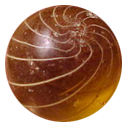
Gooseberries – this is an example of a colored glass marble.  Gooseberries have numerous thin white threads of glass that are distributed evenly around the surface of the marble.

gooseberry marble photo ciurtesy of imarbles.com

Sulphides –this type of marble consists of clear glass spheres that have a white or silvery figure suspended in their center.  The figures consist of animals, birds, people, numbers or even letters.

Sulphide marble photo ciurtesy of imarbles.com

Corkscrews—this type of marble was made with 2 or more colors that have a spiral design.  In corkscrews marbles, the spiral design rotates around the marble from one pole to the other, but the design does not meet.

Corkscrew marble photo ciurtesy of imarbles.com

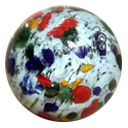
Clouds—this is an End of day marble that came with colored flecks of glass that aren’t stretched.  The flakes look like clouds that are floating over the core.

Cloud marble photo ciurtesy of imarbles.com

This is just a small sample of all of the different types of marbles that you can find.  Which ones have you run across?

What are some glassware serving pieces that you might run across?

When shopping at your favorite flea market, antique mall or thrift store, it will not take long for you to run across a serving piece.  They come in all shapes like platters, punch bowls or even a cup.  Not only that, there are a wide variety of materials that they are made of.

Here are a few of the glassware pieces you might run across when you are out and about:

Berry set—this consists of a large bowl with matching smaller bowls.  They are used for serving items like fruit and some desserts.

Salt, saltcellar—this is a small bowl used at the table to hold salt.  This type of container is also called a “master salt”.

Celery vase—this is a tall and narrow vase that is used on the table to hold celery.

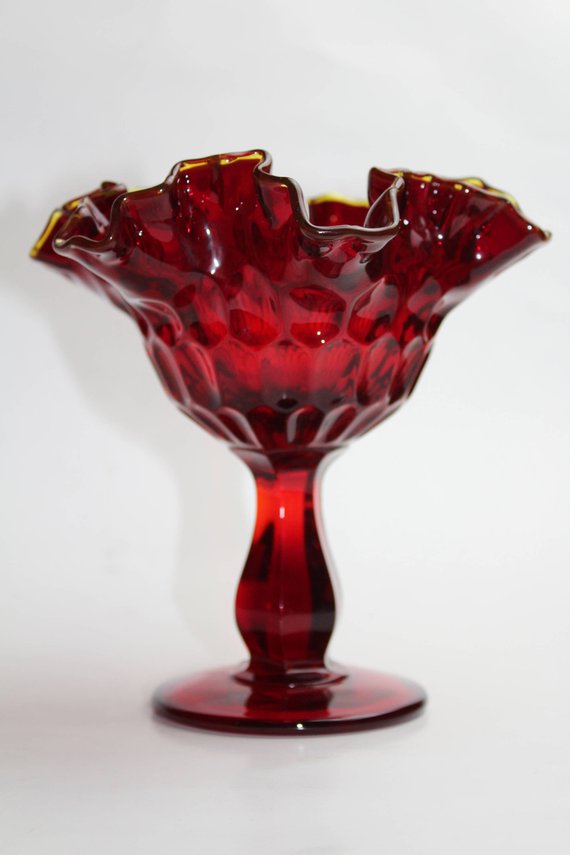
Compote—this is a dish that usually comes with a stem and a base that is used for serving compote (a fruit that is cooked in syrup).  There is a smaller dish that has a similar form used for a serving for one person.

This is only a small handful of what you will run across.  What types of serving pieces have you run across?

There is such a thing as a Malt Nutrine serving tray?

Advertising is a fun area to collect—you never know what kinds of pieces you will run across.  You might find a piggy bank advertising a local bank, a ruler advertising a grocery store or even a baseball program advertising Spalding baseballs.

Another area that advertising collectors buy are serving trays.  There are quite a few advertisements that you will find on a tray—they range anywhere from Coca Cola to Budweiser.

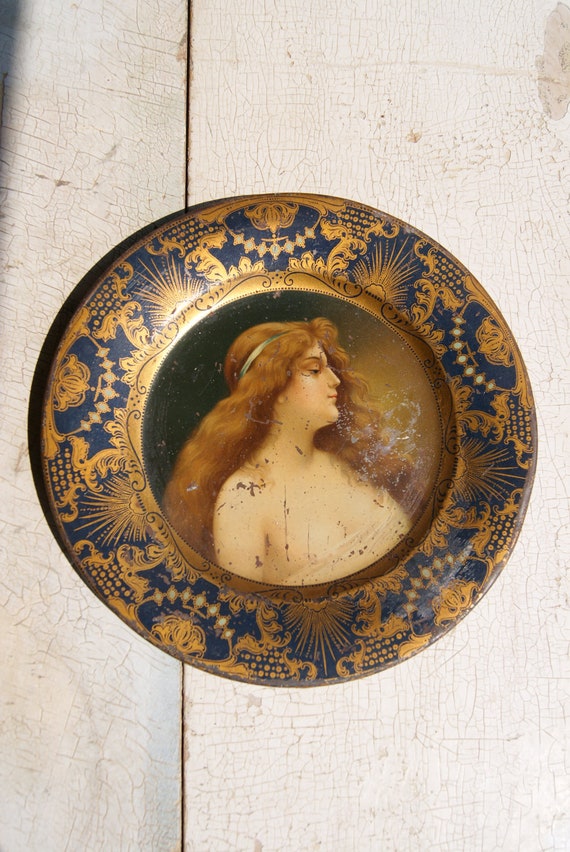
Did you know that Anheuser Bush made a serving tray for a product they made that was called Malt Nutrine?

image 0

Malt Nutrine was made by Anheuser Bush in 1905, and it was a non-alcoholic beverage.  Not only that, it was thought that Malt Nutrine could help cure insomnia.

This would be a killer piece to display with fountain drink collectibles.  You can see this terrific serving tray in my Etsy shop here.  Head on over and check it out!

Enamelware parts and pieces for the beginning collector

When you are beginning to collect items, you will figure out pretty fast that each area has its own terminology for parts of the item and even what each item is called.  Here’s some of the parts and pieces of enamelware that you will run across:

Pie pan—this is a shallow dish that is made of either metal or glass.  The pan has sloping sides in which the pies are baked.

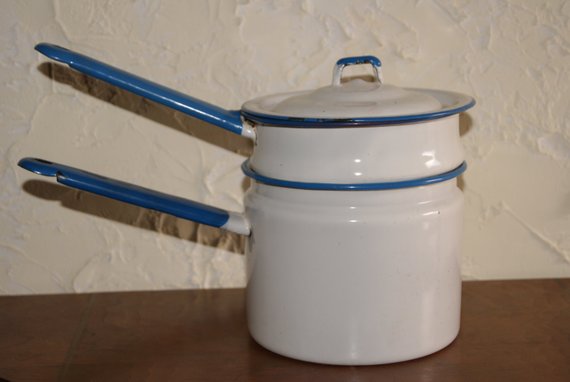
Double Boiler—this is a saucepan that has a detachable upper compartment.  The compartment is heated up by boiling water in the lower compartment.

Riveted handle—this is a handle that is held in place with Rivets (small pieces of metal that are crushed into position).  The resulting rivet holds the metal together, and you will also see rivets on other parts of enamelware (like the main body of a coffee boiler or even a tea pot).

Picture courtesy of Wikipedia.com

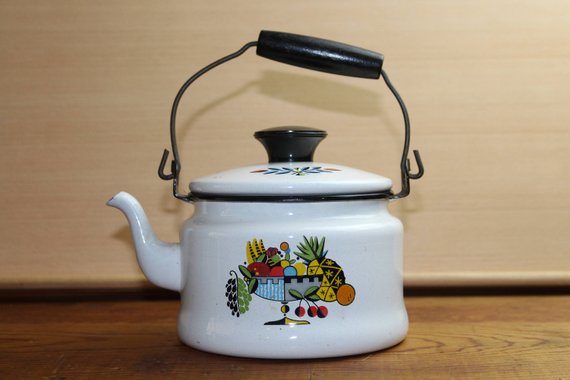
Bail handle—this is a handle that is typically made of metal.  It also consists of an open loop that moves freely within two fixed mounts, points or even ears.  This type of handle is also simply known as a “bail”.

This is only a small portion of what you will see.  What parts and pieces of enamelware have you seen or heard of?

Take a seat and look at some chair designs!

When it comes to furniture, there are quite a few different designs and forms out there—there’s more than enough to make your head spin.  This is also very true for chairs—take a seat and look at several of the designs that you will run across when you are out at your favorite place to shop:

Fauteuil—this is an upholstered armchair that has open sides, and this type of chair has also been referred to as an elbow chair.

*Picture courtesy of Wikipedia*

Adirondack chair—this is a very distinctively styled chair for the outdoors, and it is usually made out of wood.  Originally, the chair was made with a flat seat and a flat back composed of 11 flat wooden boards (it also featured wide armrests that are parallel to the ground).

*Picture courtesy of Wikipedia*

Ladderback chair—this chair gets its name from the horizontal slats that serve as the back support.  The design of the chair is reminiscent of a ladder.  Some of the other names of this chair are ladder-back chair, slatback chair or even fiddle back chair.

*Picture courtesy of Wikipedia*

This is just a few of the designs that you will see.  What have you run across?

A little Lefton Pottery history

George Zoltan Lefton was a Hungarian-born sportswear manufacturer, and he had a big passion for collecting fine porcelain.  From 1945 through 1953, the Lefton pottery company was importing many things from postwar Japan including (but not limited to) head vases, figurines, cookie jars, and salt and pepper shakers.

These items are marked “Made In Occupied Japan,” and the figures even sport a red and gold paper label that read “Lefton’s Exclusives Japan.”

Lefton contracted pottery companies around the world to produce ceramic items for Lefton.  These items are just as diverse as what they imported.

One of these really cool items that was imported is this 25th Anniversary Plate.

The silver decorator plate dates to the 1970’s and can be seen in my Etsy shop here.  Another item that shows how diverse Lefton is this great nappy.

You can see the nappy in my Etsy shop here.  As a matter of fact, you can see all of the Lefton pieces in my shop here.  Head on over and check them out!

What exactly is opalescent glass?

It doesn’t matter exactly where you are shopping for antiques and collectibles, you will run across a type of glassware called Opalescent glass. What is it exactly?

Opalescent glass is a general term for either a clear or colored glass that has a milky white,opaque or even a translucent effect to a portion of a glass piece.  It could be limited to just the rim of the piece, but you will also see it on the body of the item.

Lalique, Sabino, Jobling (this is from England) and even Fenton are all well known for their opalescent glass production.  This type of glass has also been produced in various other countries like Italy and Czechoslovakia.

One way of creating this glassware is the slow cooling of the thicker areas of the glass.  This results in what’s called crystallization, which is the formation of the milky white layer.  Another method is used in hand blown glass.  When hand blowing the glass, you use two layers of glass—the outer layer will contain chemicals that react to heat to cause the opalescence.

Another way to create Opalescent glass is to reheat certain areas of a piece and apply chemicals to the glass.  When you reheat the piece, the chemicals you use will create the opalescence (the chemicals are heat sensitive).

Over the years, there have been quite a few different colors that have been made that sport this type of effect.  Here are some of the colors that you will run across:

Amber Opalescent


French Opalescent

Pink Opalescent

Blue Opalescent

This is just a few of the colors that have been made.  What colors have you run across?

What are some of the different types of pottery that is used in the kitchen?

When you start to go to auctions, antique malls or even flea markets, you will hear several different names for pottery that is used in a kitchen.  Here’s a couple of the names that you will run across:

Bone china—this is a type of porcelain that contains bone ash in it. Bone china is the strongest of the porcelain or china ceramics, having very high mechanical and physical strength and chip resistance, and it is also known for its high levels of whiteness and translucency.

Stoneware—this is made from unrefined clay.  This type of clay has a grittier texture than porcelain due to its higher sand content.  This is fired at a high temperature (2185 degrees Fahrenheit), and the end result is a piece of pottery that is strong and chip resistant.  This type of pottery is often used to make mugs and baking dishes, and it can also be safely heated in ovens.  Stoneware is popular for dinnerware because it’s durable—and it is also less expensive than porcelain.

Earthenware—this is fired at 1915 degrees Fahrenheit, which is quite a bit lower than stoneware.  The result of this is porous pottery that is not nearly as strong as either stoneware or porcelain.  A lot of the time, earthenware can be strengthened by glazing (glazing hardens the surface, making it non-porous and it allows earthenware pieces to be used for cooking).  This is most commonly used to make pots for plants—terracotta is a type of earthenware pottery.

Porcelain—this is made from the finest quality of white clay. It is fired at a very high temperature (2300 degrees Fahrenheit)—this results in a hard, strong and translucent piece of pottery.  This type of pottery is usually white with a very smooth surface.  It is non-stick, non-porous and even dishwasher safe that makes porcelain the safest pottery to use in a kitchen. High-end dinnerware is commonly made of porcelain, and it is the most expensive kind of pottery.

This is some of the more common names that you will run across.  What are some of the names that you have run across?

What are some of the different types of marbles that you will run across?

Marbles are a fun area to collect with a wide variety of them to find.  There are so many different names out there, it can make your head spin.  Here’s a few of the names that you will run across:

Bennington—this type of marble got their name from Bennington pottery in Vermont.  They made some spotted pottery that looks like this type of marble.  Bennington marbles have a blue or even brown glaze, and the marbles aren’t completely round.  This is because Benningtons have a circular unglazed spot on them that is a result from it touching another marble while still wet with glaze.

Steelies—this is actually a ball bearing that is being used as a marble.

Peewees—these are very small marbles that measure less than a 1/2 inch wide.

Onion Skins—these are End of the day marbles in which colored flecks of glass are stretched while these are being made.  This is so the core has may swirls that resembles an onion.

This is just a handful of the names that you will run across when you are dealing with marbles.  What names have you run across?

What are some odd utensils for the kitchen that you might run across?

It does not take long in the world of antiques and collectibles for you to run across a weird utensil for the kitchen.  Here are some of the oddities that you might run across:

Cake Breaker—this is a multi-pronged metal serving piece that looks like a large comb.  It was primarily marketed as a way to slice a delicate cake without putting any undue pressure on it.  Items like Angel Food Cake are one of the items that you would use this on.

Oyster Server—this has an edge that looks like a circular saw edge.  Items like fried oysters were extremely popular at the turn of the 20th century, and this popularity demanded that this type of food get its own server. The Oyster Server’s jagged flared edge helps to gather small, lightweight food.

Lemon Forks—these tiny forks were usually used for lemons that were served with seafood or tea. The tines are sharp and splayed outwards to grip the tough lemon rind.

Victorian Folding Fruit Knife—in the Victorian era, fruit was considered a luxury because shipping it was very hard if not impossible in some cases. Men carried these fruit pocket knives to display their economic stature.  These have a small blade that is the perfect length to cut fruit.

This is only a few of the odd utensils that you will run across for the kitchen.  What have you run across?