Antique furniture parts and pieces

There are many different parts and pieces of furniture, and it can get confusing (especially when you first start to buy and sell it).  Here are some parts and pieces of what I have run across over the years:

Cabriole—This is a double-curved form used in legs (and even feet). The upper portion of the leg curves outward while the lower part curves inward.  This makes an S shape on the legs and is very distinctive.

Bombé—This is a French term for the outwardly curving shape of a piece of furniture.  The most thought of form is that of a chest.

Armoire—This is a clothes cupboard, and this can be a pretty sizable piece of furniture.  In most cases, an Armoire is a type of wardrobe.

Marquetry—This is a decorative technique in which different woods are inlaid into the body of a piece to create an image.  Flowers are a common motif; other images are used though.  Most of the time the inlay work is done with various woods—other materials like mother-of-pearl, ivory, and even tortoiseshell, have been used.

What types of parts and pieces terms have you run across?

Here’s some fun facts about PEZ dispensers

One of the things that I remember having around during my childhood is a PEZ dispenser.  The Hulk, Garfield and even Spiderman were some of the dispensers that I had, and nothing could beat that cherry flavored candy.

PEZ candy was first produced in Vienna, Austria in 1927.  The candy was first advertised as a compressed peppermint sweet, and PEZ is actually an abbreviation for PfeffErminZ (that’s German for peppermint).  These candies came in a tin that looks like what Altoids come in today.

When the dispensers came about, they were not always called that.  They were called “regulars”, and they looked a lot like a cigarette lighter.  They dispensed an adult breath mint that were marketed as an alternative to smoking.

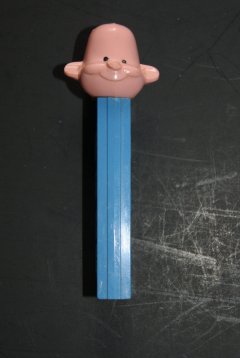
When 1955 rolled around, the dispensers started to have character heads on them, and this happened after PEZ was introduced in the United States.  One example of these character heads is this POLICEMAN dispenser.

pez

As you can see, the dispenser should have a police hat on it, but has been lost over time.  Over the years, PEZ has made dispensers with and without feet.

pez-no-feet

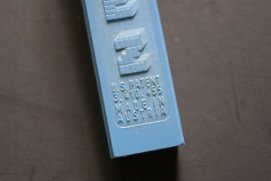
As you can tell from the picture above this great example has no feet, and you can see this dispenser in my Etsy store here.

What kind of PEZ dispensers have you had?

What reference books do you constantly read?

When you dive into the world of buying and selling, you will find yourself searching for reference books to help identify what you have and help put a price on it.  There are plenty out there, and there’s a book that covers just about every aspect of anything vintage.

When I first started to buy and sell antiques, “Schroder’s Antiques Price Guide” and “Kovel’s Antiques And Collectibles Price List” always seemed to be brought along when I headed out to an auction.  Another book that I never leave with is “A Guide Book of United States Coins” (also known as “The Red Book”) whenever I head out to coin shows.

What reference books do you find yourself constantly reading?

Is it “The Collector’s Encyclopedia Of Fiesta” by Bob And Sharon Huxford or “McCoy Pottery” by Bob And Sharon Huxford?  Do you read “Collectible Glassware from the 40’s, 50’s and 60’s” by Gene Florence if you love glass?

What are some of your favorite titles?

Two Cents worth? Yep

Did you know that there was actually a 2 cent coin that was produced by the United States mint?

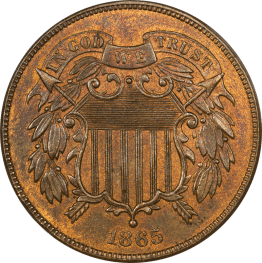
The Two Cent piece officially ran from 1864 to 1872, but there was a copy made for collectors in 1873.

The economic turmoil of the American Civil War caused any and all government-issued coins to vanish from circulation, they were hoarded very heavily by the public. Even the Indian Head cent—which was made of bronze—was pretty much gone from circulation.  The Coinage Act Of 1864 authorized the cent to switch to a bronze composition and the production of the Two Cent coin.

800px-1865_two_cent_obverse
Photo courtesy Wikipedia.com

Even though there were other mints actively producing coins in the United States at the time, this coin was only produced at the mint based in Philadelphia.  What this means is that there will not be a mint mark anywhere–which is the way this mint was marking the coins until 1980.

Two of the more famous die varieties happened in 1864.  One is called the “large motto,” and the other is called the “small motto.”  These two varieties deal with the motto, “In God We Trust.”  The words IN, GOD, and TRUST has some small differences, while the word WE has the most differences.  It all hinges on the size of it, and it is very noticeable.  The WE on “large motto” is larger than the WE on the “small motto.”

The “small motto” is much scarcer than the “large motto.”  The best idea is to keep an eye out for it in case you might walk across a case full of coins at a mall, or happen to be at a coin shop or show.

Have you seen one of these really cool coins?

small-motto
Small motto courtesy Wikipedia.com
large-motto
Large motto courtesy Wikipedia.com

Three things to consider when you sell items online

When I first started to sell online, there were three things that I found out very quickly.  Here is what I learned:

#1 The price of the item itself needs to be considered.  When I list an item to sell online, what I try to do is to make double on what I paid for the item.  This way I can have a little wiggle room if something happens like paying a little more than expected on something like shipping.

#2 You will be charged listing fees on items you put on selling sites.  On a site like Etsy, they charge a small fee to renew a listing after the item is on the website after a certain amount of time (there is also a fee when you are listing the item for the first time).  You need to watch it like a hawk—this can add up pretty fast and eat into your profits.  After one or two renewals, you need to think about adjusting the price or doing something like taking better pictures.

#3 Packing costs also need to be considered.  The packing costs will include tape, packing peanuts, and potentially the box itself (if you don’t get free boxes from places like the Post Office).  If you do not watch this area very closely, you can completely wipe out any profits if you are not careful.

What have you learned when you started to sell things online?

Better keep an eye out!

Whenever I am going through a flea market or even a local thrift store, I often remind myself that I need to keep my eyes peeled—you never know what you will run across.  It could be anything really, it could be any type of item that you didn’t expect.

This happened to me not too long ago when I went to a local Goodwill store.  I was walking through and saw, well…

SONY DSC

SONY DSC

SONY DSC

When I first saw it, I knew that it was a scaled down house.  It looks like someone took a lot of time to make it, but the real question was rather simple—what was it really?

After looking at it for a little bit, I had part of the roof come off of the house in my hand, kind of like what’s pictured below.  I quickly realized that this was a jewelry box.

SONY DSC

SONY DSC

Talk about a fun way to store your jewelry!  So, it always pays to keep an eye peeled so you don’t miss that one-of-a-kind item.

What kinds of interesting finds have you run across when out at a flea market or antique store?