Antique furniture parts and pieces

There are many different parts and pieces of furniture, and it can get confusing (especially when you first start to buy and sell it).  Here are some parts and pieces of what I have run across over the years:

Cabriole—This is a double-curved form used in legs (and even feet). The upper portion of the leg curves outward while the lower part curves inward.  This makes an S shape on the legs and is very distinctive.

Bombé—This is a French term for the outwardly curving shape of a piece of furniture.  The most thought of form is that of a chest.

Armoire—This is a clothes cupboard, and this can be a pretty sizable piece of furniture.  In most cases, an Armoire is a type of wardrobe.

Marquetry—This is a decorative technique in which different woods are inlaid into the body of a piece to create an image.  Flowers are a common motif; other images are used though.  Most of the time the inlay work is done with various woods—other materials like mother-of-pearl, ivory, and even tortoiseshell, have been used.

What types of parts and pieces terms have you run across?

Sulfide marbles—what exactly are they?

Cats Eye, Steelies, and Latticino Core are all different types of marbles that you’ll run across.  One of my favorite type of marble is what’s called a Sulfide.

Sulfide marbles were made from the late 1800’s into the early 1900’s.  More often than not, they are the size of a shooter.  This type of marble is made of glass with a chalk inside–and that piece comes in a wide variety of shapes from an animals, buildings, people, flowers and even numbers.

Sulphide Shooter Marble With Lamb

The most common type of glass that you’ll see is clear, but different colors like green and blue have been found.

There are some things that you need to remember when you are either starting to collect these.  Since this was a shooter (and sulfides were actually played with), there is a very good chance that there will be some surface chips or cracks in the marble.

Another thing to remember is that the chalk piece was inserted into molten glass when these were made.  The chalk piece stands a good chance of breaking in half when the marble is made.

Beware though—there are modern varieties of sulfides out on the market.  It’s easy to tell the old from the new marbles when you are looking at them.  The quality of the glass and chalk figure are of a better quality on the new marbles.  Pay attention to the chalk piece itself—it’s almost always painted on the new ones too.

What kinds of Sulfide marbles have you run across?

What reference books do you constantly read?

When you dive into the world of buying and selling, you will find yourself searching for reference books to help identify what you have and help put a price on it.  There are plenty out there, and there’s a book that covers just about every aspect of anything vintage.

When I first started to buy and sell antiques, “Schroder’s Antiques Price Guide” and “Kovel’s Antiques And Collectibles Price List” always seemed to be brought along when I headed out to an auction.  Another book that I never leave with is “A Guide Book of United States Coins” (also known as “The Red Book”) whenever I head out to coin shows.

What reference books do you find yourself constantly reading?

Is it “The Collector’s Encyclopedia Of Fiesta” by Bob And Sharon Huxford or “McCoy Pottery” by Bob And Sharon Huxford?  Do you read “Collectible Glassware from the 40’s, 50’s and 60’s” by Gene Florence if you love glass?

What are some of your favorite titles?

The crazy world of coin collecting and its vocabulary

When I started collecting coins when I was younger, I found out that the crazy thing about it was the vocabulary.  It’s the craziest thing that I have ever heard—there’s about Good and about uncirculated (which are both terms that you use to grade a coin).  There’s even a matte proof, an inverted date, and even a hub.

Here’s some more words that will make your head spin:

Bag mark—these are marks on a coin that occur when coins bump into each other.  This could happen when they are placed in bags at the mint or being moved in the bag. Larger size coins typically exhibit more bag marks than smaller ones due to their size.

Rim—this is the raised edge of a coin that’s created by a machine called the upsetting mill. The idea of a rim is that if the edge on both sides of the coin is raised as high as the design it will help protect the coins design from wear.  This way the coin can be in circulation a little longer without being replaced.

Walker—this is a nick name for the United States Walking Liberty Half dollar.  The design was made between 1916 and 1947, and this is thought by some to be one of the US most beautiful coin designs. The current American Silver Eagles that United States makes have the same design on their obverse.

These are just a few of the terms that I’ve heard over the years.  What have you heard?

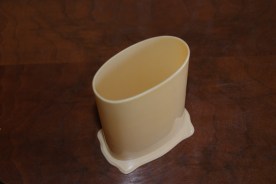
Reader’s Help: What in the world is this Celluloid piece?

SONY DSC

Not too long ago, I ran into this great vintage celluloid piece at a local flea market.  I know that it’s some sort of holder, but what exactly was it used for?

SONY DSC

In one reference book that I have, the book shows it and does not mention what this is.  Another book stated that it was a tooth brush holder, and yet another states that this is a holder for eyeglasses.

SONY DSC

Needless to say, I got pretty baffled on what this could be.  So here’s my question–what is this piece really for?  Is what one of the books said right, or is this something completely different?

Any information is greatly appreciated.  What do you think it is?

Two Cents worth? Yep

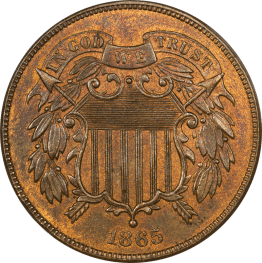
Did you know that there was actually a 2 cent coin that was produced by the United States mint?

The Two Cent piece officially ran from 1864 to 1872, but there was a copy made for collectors in 1873.

The economic turmoil of the American Civil War caused any and all government-issued coins to vanish from circulation, they were hoarded very heavily by the public. Even the Indian Head cent—which was made of bronze—was pretty much gone from circulation.  The Coinage Act Of 1864 authorized the cent to switch to a bronze composition and the production of the Two Cent coin.

800px-1865_two_cent_obverse
Photo courtesy Wikipedia.com

Even though there were other mints actively producing coins in the United States at the time, this coin was only produced at the mint based in Philadelphia.  What this means is that there will not be a mint mark anywhere–which is the way this mint was marking the coins until 1980.

Two of the more famous die varieties happened in 1864.  One is called the “large motto,” and the other is called the “small motto.”  These two varieties deal with the motto, “In God We Trust.”  The words IN, GOD, and TRUST has some small differences, while the word WE has the most differences.  It all hinges on the size of it, and it is very noticeable.  The WE on “large motto” is larger than the WE on the “small motto.”

The “small motto” is much scarcer than the “large motto.”  The best idea is to keep an eye out for it in case you might walk across a case full of coins at a mall, or happen to be at a coin shop or show.

Have you seen one of these really cool coins?

small-motto
Small motto courtesy Wikipedia.com
large-motto
Large motto courtesy Wikipedia.com

Three things to consider when you sell items online

When I first started to sell online, there were three things that I found out very quickly.  Here is what I learned:

#1 The price of the item itself needs to be considered.  When I list an item to sell online, what I try to do is to make double on what I paid for the item.  This way I can have a little wiggle room if something happens like paying a little more than expected on something like shipping.

#2 You will be charged listing fees on items you put on selling sites.  On a site like Etsy, they charge a small fee to renew a listing after the item is on the website after a certain amount of time (there is also a fee when you are listing the item for the first time).  You need to watch it like a hawk—this can add up pretty fast and eat into your profits.  After one or two renewals, you need to think about adjusting the price or doing something like taking better pictures.

#3 Packing costs also need to be considered.  The packing costs will include tape, packing peanuts, and potentially the box itself (if you don’t get free boxes from places like the Post Office).  If you do not watch this area very closely, you can completely wipe out any profits if you are not careful.

What have you learned when you started to sell things online?

Better keep an eye out!

Whenever I am going through a flea market or even a local thrift store, I often remind myself that I need to keep my eyes peeled—you never know what you will run across.  It could be anything really, it could be any type of item that you didn’t expect.

This happened to me not too long ago when I went to a local Goodwill store.  I was walking through and saw, well…

SONY DSC

SONY DSC

SONY DSC

When I first saw it, I knew that it was a scaled down house.  It looks like someone took a lot of time to make it, but the real question was rather simple—what was it really?

After looking at it for a little bit, I had part of the roof come off of the house in my hand, kind of like what’s pictured below.  I quickly realized that this was a jewelry box.

SONY DSC

SONY DSC

Talk about a fun way to store your jewelry!  So, it always pays to keep an eye peeled so you don’t miss that one-of-a-kind item.

What kinds of interesting finds have you run across when out at a flea market or antique store?

More vocabulary words for the glass collector to keep in mind

When you start to collect items in a certain area like glassware, you find out that you need to know some of the terminology when you go along.  Here’s some of the words that I’ve heard over the years about glassware:

Bent (or Slumped) Glass—this is glass that has been heated up in a kiln from room temperature to a temperature high enough to cause it to soften and sag into or even over a mold. The finished product will take the shape of the mold that the glass is around.

Iridescent—this is a surface treatment when a layer of metallic oxide is bonded to the hot glass surface just after the form the glass into a sheet.  The result is a colorful one, and it also has a shimmering effect.

Seedy Glass—this is glass that has air bubbles trapped in it. This is when air or gas is injected into the molten glass prior to forming the sheet causing the bubbles.

What kind of terms have you heard or run across?

How do you sell items on the internet that have flaws in them?

How do you go about selling items on the internet that have flaws in them?

This is actually one of the more popular questions that I get asked.  There are several ways to sell an item that has flaws in it, and the first one is the most obvious—sell it as is.  Selling the item like this could be that it can be repaired or restored to original condition.

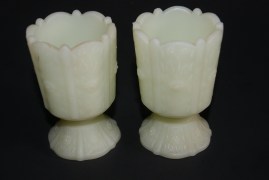
Another way that you can sell the item is to sell it with another item that is just like the damaged one.  Right now, I have a Fenton match holder that I am selling like this (and you can see the listing here).

SONY DSC

If you have a crafty side, you can turn it into something completely different.  It could be something like a non-functioning kerosene lantern.  You could electrify it and put a retro looking bulb (or even a normal low wattage one) in it.  After you do this, you can display it on a side table or the corner of a desk.  Another idea could be turning a run down book rack that you have around the house into a wine rack.

One thing that I have seen people do is to combine several items together to make something new.  I was at a local flea market shopping when I saw a yard ornament in the shape of a sunflower.  The flower top was made out of a broken plate and recycled scraps of thin wood (the wood came from a broken Coca Cola crate).

No matter how you sell the flawed item, you need to provide plenty of clear pictures.  This way any potential buyer can get a good view of the item.

The other thing that you need to do is to provide a well-written description of the item.  This way the potential buyer knows what’s going on with the piece, and even what you did to it.

How have you sold items that have flaws on them?