What happened in 1792?

It’s always fun to find out what happened in a year, especially if you are a vintage and antiques lover.  Since you are always looking around to find out what happened during the time that a piece in your collection was made, you will quickly run across tons of facts.  Here’s a few that I have run across recently:

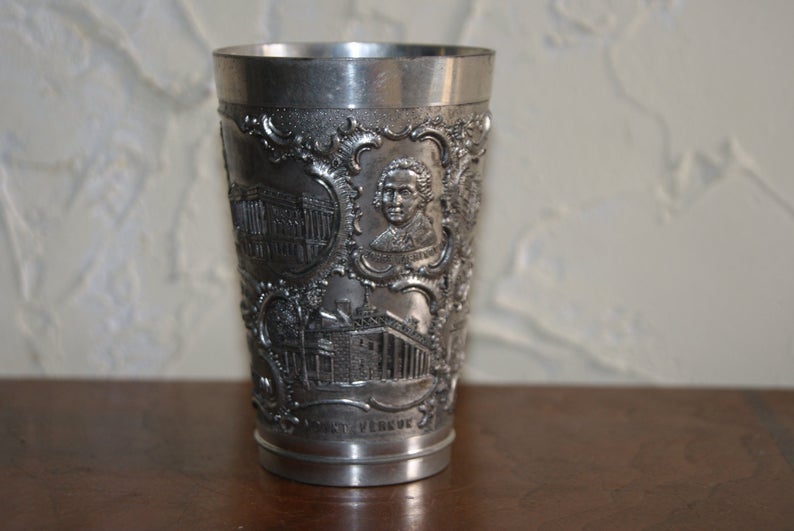
On February 20th, The Postal Service Act was signed by George Washington.  This established the United States Post Office–and not to mention all of the great stamps that collectors look for.

The 20th of March saw a new capital of North Carolina and county seat of the newly formed Wake County.  This was after North Carolina State Senator and surveyor William Christmas submits his design for the city.  A few months later, the capital is named Raleigh in honor of Sir Walter Raleigh.

On April 2nd, The Coinage Act is passed.  This Act established the United States Mint—it also led to the production of the half cent, cent, half disme (or half dime), dime, quarter, half dollar and even the dollar coin.  The were even gold coins with a $2.50, $5 and even $10 face value.

What kind of fun facts have you run across?

What are some tips for the beginning antique dealer?

You have attended auctions and estate sales and have even headed out to flea markets, antique malls and even some garage sales.  Now you have decided to take the plunge and start to sell vintage and collectible items.

What are some things to remember when it comes to selling off some of the deals that you have found along the way?

If you are selling an electronic item like a video game console, see if it is possible to test the item.  If it does, you can get a little more money for it.  Not only that, you can also give any potential customer more confidence about it if they want to buy it.

If you are going to be selling items for a good amount of time, you need to keep an eye open to see what is selling and what’s not.  This way you don’t spend hard earned money on items that have the potential of never selling or taking a long time to do so.

Condition is the biggest hurdle to cross when it comes to making sales.  I have seen people walk away from an item if the item is broken or has missing pieces.

This is a few things to remember when you are beginning to sell items.  What are some of the tips that you have run across?

How do you know if the piece you have is truly rare?

One of the words that I hear a lot when I am shopping at a local flea market or even on the internet is the word “rare”.  What goes into labeling an item rare?

The first thing to consider is how many pieces were originally made.  The fewer the items that were made means that there are not as many on the secondary market.

Materials that an item is made of will help drive rarity.  For example, enamelware will have quite a few common items, and one of the collectible areas for enamelware is called “End Of The Day”.  These pieces were literally made at the end of the workday and have at least 3 different colors on them.  The employees that produced this type of item used up the excess materials that were left after a full day’s work.  With this, there will be some interesting color combinations on different pieces.

Another thing to consider is how often an item is used.  This could be a toy that is played with or even a piece of jewelry that is worn.  The more an item is used, the more wear and tear (and even damage) can occur.  It is harder to find an item that is used every day that’s in excellent or even mint shape.

Items like clothing, glassware or even pottery are going to be more fragile.  This will lead to chips, moth holes, cracks, or even rips and tears.  Damage like this will help drive up the price of the good examples.

Handmade pieces also tend to be rare as well.  This is a wide range of items that include autographs, paintings, tramp art, and even furniture.  Because they are handmade (rather than mass produced items), they are one-of-a-kind pieces.  Collectors are often willing to pay more for an item they love that they will never see again!

We all know that plenty of homework helps uncover what items are truly rare!  What kinds of rarities are you on the hunt for?

What are some glass terms that you will run across?

Whenever you go out to an antique mall, flea market or even an auction, you will hear some terminology that describes areas of collecting.

Here are a few words that you will run across when you hear people talk about glass:

Frosting—this is a matte finish that is produced by exposing the glass item to fumes of hydrofluoric acid.  This is also a small patch of surface cracks by weathering.

Ice glass—this is a decorative effect that causes the surface of the glass to resemble cracked ice.  This is accomplished by plunging a piece of hot glass into cold water as quick as possible.  This process creates a finish to the glass that resembles cracks.

Luster—this shiny metallic effect is made by painting the surface of the glass item with metallic oxides that is dissolved in acid and mixed with an oily medium.  The item is fired in oxygen free conditions which cause the metal to deposit a distinctive shiny surface after it is cleaned.

Opal glass—this is a glass item that looks like an opal being translucent and white, and it has a grayish or bluish tinge to it.

This is a small look at some of the words that you will hear about glassware.  What are some of the words you ran across?

What happened in 1965?

Whenever I am looking for information on an item that I bought, there are times that I run across some tidbits of what happened during a certain year.

Here are a few of the things that I ran across for the year of 1965:

September 25 saw The Tom & Jerry carton series make its world broadcast premiere on CBS.

The Pillsbury Doughboy was introduced on November 7, 1965.

The Television shows HOGAN’S HEROES, THE DATING GAME and LOST IN SPACE made their debut in 1965.

The famous Gateway Arch that is based in St. Louis, Missouri was completed in October of 1965.

This is a small portion of what happened during the 1965 year.  What are some of the things that happened that you heard of?

What are some tips for shipping vintage items?

You have taken the plunge into the world of buying vintage items, and you are now beginning to sell some items online.  What are some tips to keep in mind when it comes to shipping vintage items?

Breakable items like glassware get both packing peanuts and bubble wrap when I pack them.

When I ship clothing, I put a layer of tissue paper in as I fold the item.  I do this to help with keeping it lying flat in the box.

If I am shipping a book in a packing envelope, I will often wrap the book in a plastic bag to help keep the book from getting wet (especially if there is a chance of rain or snow).

When I pack sports cards, I always try to use both a hard plastic holder to put the card in and a piece of cardboard behind it.  This way helps the card from being bent when it is shipped.

This is just a few tips for you to use when it comes to shipping a vintage item.  What tips have you run across?

I have started a collection on an area that I love. Now what?

Not too long ago, you have made the leap and started a collection on what you love.  Not only that, you also found a few pieces to add to that collection.

Now that you have accomplished all of this, what are some things to keep in mind?

After a little time to get your collection really going, you can narrow down the focus of your collection to several smaller areas.  This can be collecting Morgan dollars and Capped Bust half dollars if you are a coin collector or to collect Fenton and Northwood Glass if you collect glassware or even Carnival Glass.  This help keep you interested in your collection.

There are going to be times that you will have to sell off a part of your collection.  I know that this sounds counterproductive, but this prevents hoarding.  Not only that, it also helps keep your collection funded.

Keep your mind open to trading.  This way you can take similar items that are in your collection and trade them for an item that you really want to add to your collection.

Learn as much of the history on your collection that you can.  Not only does this help you with identifying the real from the reproductions, you can also tell people about what you collect.

This is just a few tips on collecting.  What tips have you heard?

Harold Bell Wright

One name that has remained popular here in the Ozarks is Harold Bell Wright, an author that wrote several books about my area.

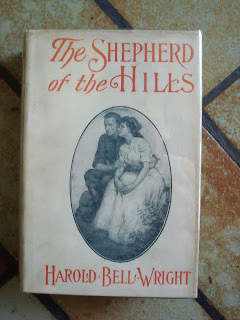
One such book that he wrote is called “The Shepherd of the Hills”.  The story is based mainly in the Branson area, and at one time was second in sales only to the Bible.

Even to this day, you can still catch a play at the park that has the same name as the book.

All of his books are still well received here in the Ozarks, and you can still find them in just about any flea market or antique mall you go to here.

What are some of the books by Harold Bell Wright have you run across?

Beginners tip: what are some auction no-no’s?

You are new to the auction world, and you have found one that is close by that you want to attend.  What are some of the things that you need to keep in mind that you should not do?

Do not bid if you are not sure if you want to buy the item.

Do not bid just to drive up the price.

Do not be rude, especially to the auctioneer.  This is an easy way to get people mad at you, and it could also get you kicked out of the auction.

Do not go in unprepared.  When I go, I always have packing material and a box or two to pack everything that I buy.  Another good thing to bring is a two-wheeler to help move the heavy items.

Do not start bidding on an item at the highest amount you are willing to pay.  If you listen to the auctioneer for a second or two, you will hear them lower the price down until they get a bid on it.  If you are patient enough, you will get a good deal on the item you are bidding on.

These are a few no-no’s to keep in mind when you attend an auction.  What are others that you have heard of?

A buying lesson for the beginning shopper—make sure to check for damage!

When I was at an estate sale not too long ago, I managed to find some really cool items.  One of the items was a Lefton salad plate made for the Order of The Eastern Star.

I had purchased it under the notion that the plate was in good shape.  When I got the plate home, I found the plate had a chip on the edge of it.

Today when we shop, we have the ability to use our cell phone to check out the worth and rarity of a piece that we are interested in.  To a great extent, it has diminished the need to go with your gut, but not completely.

You still have to be able to judge if in item is fake or real—and frankly to discover the flaws on an item.  You need to use your fingers and the light that is around you to discover chips and even cracks.

Fortunately for me, the purchase price of the plate was inexpensive, it was less than 5 dollars.

What kinds of mistakes have you made when you purchased an item?